
 Español
 Deutsch

How Does Carbon Steel Roller Improve Web Handling Stability
In continuous converting environments where film, paper, foil, and composite webs travel through multi-stage processing paths, movement stability tends to define whether downstream operations remain consistent or gradually drift into correction-heavy conditions, since every section in the line inherits the motion pattern formed at the previous contact point rather than resetting it.
A Carbon Steel Roller is positioned inside that movement path as a structural contact element that shapes directional behavior through sustained surface engagement, and even though no active control logic is involved, the physical interaction between roller surface and moving web gradually determines whether alignment remains steady across long operating cycles.
Speed variations, tension fluctuations, and intermittent load changes rarely act in isolation, and once combined within a running system, the web begins to respond as a continuous strip rather than segmented sections, which makes early stabilization through roller contact behavior more relevant than later-stage correction.
What Happens When Web Tension Moves Away From Balance
Tension imbalance in a running web develops quietly through uneven force distribution across width and length, and once the imbalance begins, the material rarely returns to equilibrium without external adjustment, since each roller contact point transfers a slightly altered force profile into the next stage of movement.
In practical operation, instability tends to appear through progressive patterns rather than abrupt failure, including gradual edge drift, subtle waviness across the surface, and inconsistent winding density at the receiving end, all of which originate from small directional shifts introduced during earlier roller contact.
When a Carbon Steel Roller is part of the system, the rigidity of its structure helps limit deformation under continuous load, which reduces the chance of introducing additional directional variation during transport, although surrounding rollers and tension units still influence final behavior.
A simplified view of tension behavior across a line can be represented as follows:
| Stage of Movement | Condition of Web | Resulting Behavior |
|---|---|---|
| Entry section | Initial force applied | Direction begins to form |
| Mid transfer | Accumulated tension shifts | Minor lateral drift appears |
| Processing zone | Combined mechanical contact | Surface consistency changes |
| Exit section | Final winding stage | Pattern becomes fixed |
Once imbalance is established at an early stage, later correction becomes increasingly dependent on system-wide alignment rather than isolated adjustment.
What Functional Role Does Carbon Steel Roller Serve in Web Transport
Within a continuous processing line, a Carbon Steel Roller operates as a load-bearing and directional support surface that maintains consistent physical contact with the moving web, and this contact becomes a reference line that guides material trajectory through friction balance and structural rigidity rather than active control.
As the web passes over the roller surface, contact pressure distributes across the width of the material, and this distribution reduces localized stress concentration that could otherwise trigger edge distortion or tracking deviation, especially during speed transitions.
The role of the roller can be interpreted through several mechanical interactions:
- continuous surface guidance that defines travel direction
- distributed load transfer across the roller circumference
- stabilization of movement during tension fluctuations
- reduction of lateral sensitivity during high-speed flow
| Functional Area | Mechanical Behavior | Influence on Web Movement |
|---|---|---|
| Direction support | Fixed axis rotation | Maintains travel alignment |
| Load distribution | Even surface contact | Reduces localized stress |
| Motion stabilization | Continuous rotation | Smooth passage through stages |
| Transition control | Stage-to-stage support | Limits directional disruption |
The Carbon Steel Roller does not actively correct deviation, yet the consistency of its surface interaction reduces the likelihood of deviation forming during continuous operation.
Why Structural Rigidity Influences Movement Consistency
Carbon steel as a structural material provides resistance to bending and surface deformation under sustained load, and in a rolling system where contact pressure repeats over long cycles, such resistance becomes relevant for maintaining a stable rotational geometry.
When roller geometry remains unchanged during operation, the web experiences a predictable contact line, and that predictability reduces variation in directional response across multiple passes. In contrast, even slight deformation under load can introduce uneven contact pressure, which gradually alters tracking behavior.
Structural rigidity contributes to several operational conditions:
- maintenance of consistent axis alignment under load
- reduction of micro-vibration during rotation
- stabilization of surface contact across full width
- limitation of progressive shape deviation over time
Rotation smoothness is also influenced by structural integrity, since balanced load distribution allows bearings and support points to operate without uneven resistance, which in turn reduces fluctuation in web movement.
How Surface Interaction Shapes Web Tracking Behavior
The interface between Carbon Steel Roller surface and moving web determines how frictional forces are transferred, and that transfer directly influences whether material slides freely or maintains controlled grip during transport.
Surface condition does not operate as a single variable, since even minor differences in finish texture can alter how the web responds under tension, particularly when processing speed changes or when material composition varies across batches.
| Surface Condition | Contact Character | Resulting Web Behavior |
|---|---|---|
| Smooth finish | Minimal resistance | Free-flow movement |
| Controlled texture | Balanced grip | Stable alignment retention |
| Coated interface | Tuned friction level | Adjusted tracking response |
As processing speed increases, surface interaction becomes more sensitive to small changes in friction balance, making consistent surface condition a key factor in maintaining stable web flow across extended production cycles.
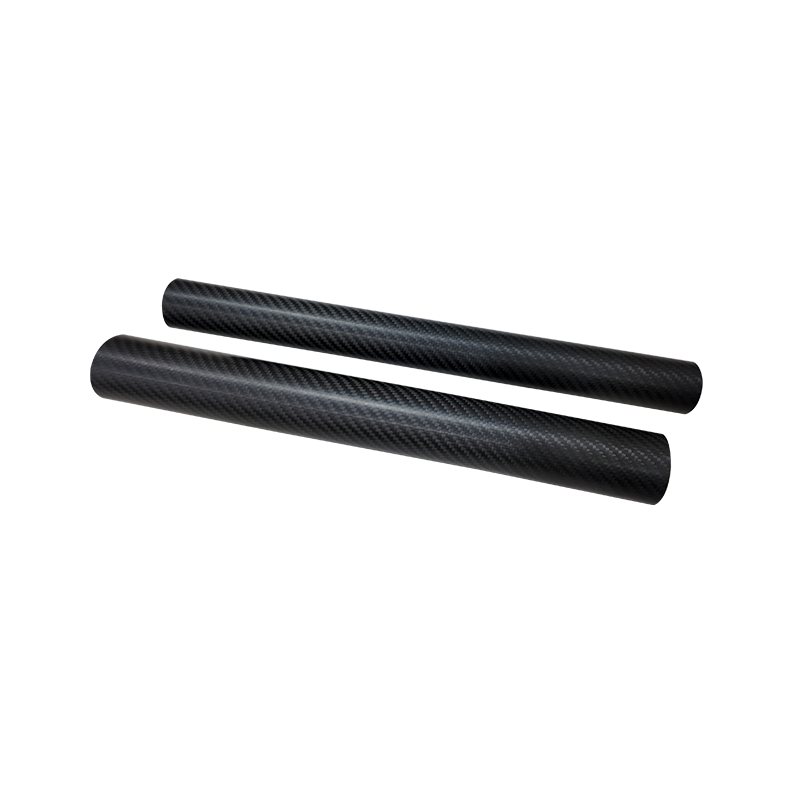
How Carbon Steel Roller Integrates Within Multi-Roller Systems
In practical production layouts, Carbon Steel Roller units rarely operate in isolation, since web handling systems rely on sequential roller arrangements where each unit contributes a specific function within the overall movement path.
Guide rollers define lateral positioning, tension rollers regulate force distribution, and driven rollers manage propulsion, while Carbon Steel Roller units often provide structural continuity between these functional zones.
Positioning within the system influences how the roller affects web behavior, since early-stage placement tends to shape initial alignment, while mid-line positioning stabilizes ongoing transport, and downstream placement influences final winding consistency.
Stable web handling emerges from coordinated interaction rather than isolated roller performance, where each contact point contributes to maintaining controlled movement across the entire processing path.
How System Layout Shapes Web Stability Around Carbon Steel Roller
In long continuous processing lines, the way rollers are arranged often decides how forces arrive at each contact point, and once the layout is fixed, a Carbon Steel Roller does not work in isolation anymore, since every change in spacing, angle, and transition direction influences how the web reaches its surface.
When roller spacing stays even, material tends to enter the contact zone with a balanced tension profile, which allows the Carbon Steel Roller to guide movement without sudden correction. When spacing becomes irregular, tension tends to build and release in uneven cycles, and that variation travels forward as slight directional drift.
Transitions between sections also matter. A gentle change in direction helps the web maintain a stable path, while abrupt shifts introduce residual stress that does not disappear immediately after the roller contact point. That stress often shows up later as edge deviation or uneven winding.
Even though the Carbon Steel Roller provides structural stability, its effect still depends heavily on how the surrounding layout feeds material into it.
How Rubber Roller Interaction Changes System Behavior
In many web handling systems, Carbon Steel Roller works alongside rubber-covered rollers, forming a combined structure where rigid and elastic surfaces balance each other during operation.
Carbon steel brings shape stability and directional consistency, while rubber layers absorb small fluctuations in tension that occur during speed changes or material variation. When both interact properly, the system becomes less sensitive to sudden force changes.
Rubber rollers supplied through different manufacturing standards may vary in surface response, which influences how pressure is transferred to the web. Softer surfaces tend to cushion tension spikes, while firmer coatings hold material more tightly during movement.
When paired with a Carbon Steel Roller, the interaction usually follows a simple pattern: steel defines direction, rubber adjusts contact feel. That balance helps reduce sudden lateral movement without making the system overly rigid.
How Long-Term Operation Changes Roller Behavior
With continuous operation over extended periods, even stable roller systems begin to show gradual changes in surface condition and rotation behavior. A Carbon Steel Roller does not lose its function suddenly, yet long exposure to friction, pressure, and material residue slowly modifies how it interacts with the web.
Surface contact may become slightly less uniform after repeated cycles, especially when cleaning routines are irregular or when processed materials leave fine particles on the roller face. These small changes can influence friction balance, which in turn affects tracking consistency.
Bearing condition also plays a role. When rotation resistance increases slightly, the web may respond with minor tension fluctuations that were not present during earlier operation stages.
Typical long-term influences include:
- gradual change in surface smoothness
- slight variation in rotational resistance
- accumulation of fine residue on contact areas
- small shifts in alignment behavior over time
None of these changes usually stop operation, yet they can slowly alter how stable the web feels during continuous movement.
How Carbon Steel Roller Supports Final Web Output Consistency
As material moves toward the final stage of processing, earlier interactions across all rollers begin to define its final condition. A Carbon Steel Roller contributes to this stage indirectly by controlling how stable the web remains during earlier transport sections.
If directional stability is maintained throughout the line, the material reaches the winding or finishing stage with fewer accumulated deviations. Edge alignment remains more uniform, and surface structure is less affected by repeated directional correction.
When instability appears earlier in the system, those small shifts tend to build up, and by the time the material reaches the end, they become more visible in winding quality or surface alignment.
The role of Carbon Steel Roller in this context is not corrective at the end stage, but stabilizing during movement so that fewer adjustments are needed later in the process chain.
How System Design Decisions Influence Overall Stability
Web handling stability is rarely controlled by a single component. Instead, it emerges from how multiple rollers interact, how tension is distributed, and how the material moves through different stages of processing.
Carbon Steel Roller functions as part of that structure, providing a consistent physical reference point that supports directional control. When system design maintains balanced spacing and smooth transitions, the roller works with fewer disturbances and keeps the web moving in a more predictable path.
In practical operation, stability depends less on isolated performance and more on continuous interaction between layout, material behavior, and roller contact conditions.

We specialize in manufacturing aluminum guide rolls, air shafts, steel rolls, rubber rolls, curved rolls, slip shafts, magnetic powder brakes, and other mechanical supporting products.
©2025 Ruian Baixiao Machinery Co., Ltd.

Aluminum Guide Rollers Manufacturer