
 Español
 Deutsch

How Does Carbon Fiber Rubber Roller Affect Material Transfer
Carbon Fiber Rubber Roller in Real Material Transfer Conditions
In many production lines, rollers are not something people pay attention to at the beginning. They sit inside machines, turning again and again, moving material forward in a continuous rhythm. Only when something feels slightly off in the flow, the roller starts to get more attention.
A Carbon Fiber Rubber Roller is usually introduced into systems where the movement speed is not steady all the time. There are changes in speed, changes in load, and sometimes changes in the material itself. In those situations, the roller is expected to keep things stable without adding extra disturbance.
Why Roller Weight Quietly Changes the Whole System Behavior
At first glance, weight looks like a simple physical detail. But in a running system, it affects how everything responds.
A heavier roller does not like sudden change. Once it starts moving, it tends to keep that motion going. When the system asks it to slow down or speed up, there is a delay in response. It is not a failure, just the nature of mass.
A lighter roller behaves differently. It reacts more directly when the system changes direction or speed. There is less "resistance feeling" in transition.
In real use, this shows up in small ways:
- the line feels quicker to respond during start
- speed changes feel less delayed
- alignment shifts settle faster
- movement feels less "dragged"
None of these are dramatic alone, but together they change how stable the flow feels.
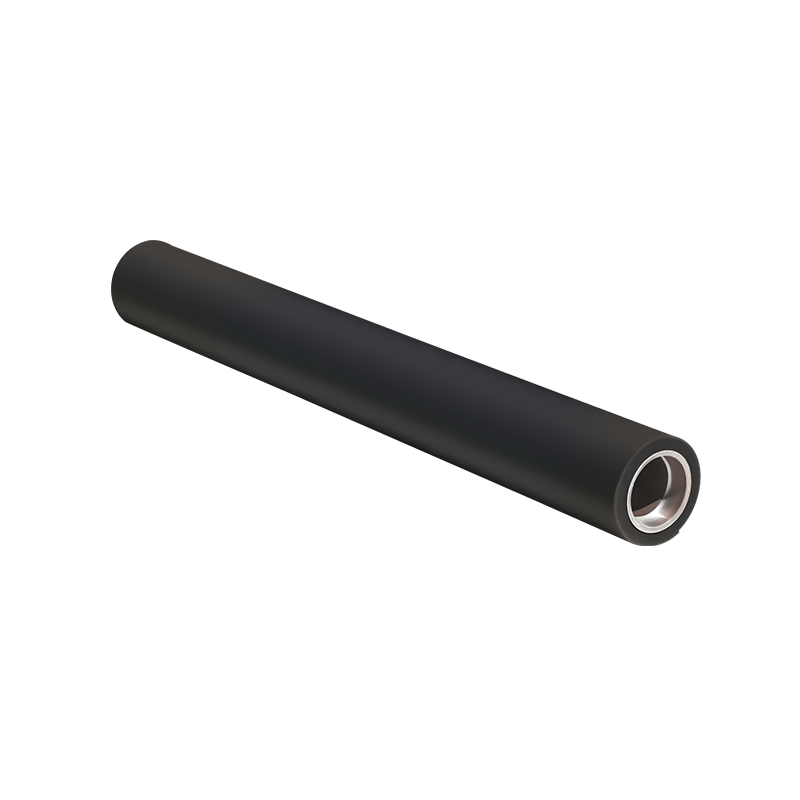
What a Carbon Fiber Rubber Roller Actually Brings Into Structure
A Carbon Fiber Rubber Roller is not just about replacing metal with lighter material. The structure itself changes how force travels through the roller.
Inside, carbon fiber forms a supporting body. It keeps the shape stable without adding unnecessary weight. Around it, the rubber layer handles direct contact with the material moving across the surface.
So the roller is doing two things at the same time:
- holding its shape during rotation
- keeping stable contact with moving material
Between these two layers, the behavior becomes balanced. The roller is not overly rigid, and not too soft either. It sits in a middle condition where motion and contact can stay steady.
A simple breakdown of what is happening:
| Part of structure | What it quietly does during operation |
|---|---|
| Carbon fiber body | Keeps shape steady while rotating |
| Rubber outer layer | Touches and guides moving material |
| Inner support zone | Helps rotation stay smooth |
| Connection shaft | Transfers motion from drive system |
It is not a complicated idea, but the combination changes how stable the movement feels.
How Lighter Rotation Changes Movement Response
When a roller is lighter, it does not carry as much resistance when motion starts or stops. That changes how the system feels during operation shifts.
Instead of slowly catching up with speed changes, the roller follows the system more directly. This reduces the "lagging feeling" that sometimes appears in heavier setups.
In real movement behavior, this can be noticed in situations like:
- starting the line from a stop
- slowing down for process adjustment
- switching between different material speeds
- stabilizing after sudden changes
The roller does not need extra time to settle into motion. It adjusts as the system adjusts.
Why Fast Response Matters in Continuous Transfer
In continuous material handling, there is rarely a long pause. Even small changes in speed or tension happen while the system is still running.
If the roller responds slowly, the material may feel slight uneven pull or shift during those moments. It may not break the process, but it changes the smoothness of movement.
With a lighter structure, the reaction becomes more direct. The system does not wait for heavy inertia to settle before movement stabilizes.
In simple terms:
- faster response → less delay in material adjustment
- smoother transition → fewer sudden tension changes
- steady flow → reduced small misalignment moments
It is less about speed itself, more about how quickly stability returns after change.
How Carbon Fiber Changes the Feel of Strength
Carbon fiber is often chosen not just for strength, but for how it holds shape without adding weight. In roller systems, this becomes important when tension is applied continuously.
If a roller body bends slightly during operation, the material running over it also changes position. That small shift can repeat across long distances.
A carbon fiber structure reduces that movement. It keeps the roller shape closer to its original form during rotation.
What this means in real use:
- contact surface stays more consistent
- material path feels more controlled
- shape distortion is reduced during load
- long runs stay more uniform in behavior
It is not about making the system rigid. It is about avoiding small shape changes that slowly affect alignment.
Why Reduced Deflection Helps Material Stay Stable
Deflection is often quiet. It does not always show up as a visible issue. It appears as small changes in how the material sits on the roller surface.
When the roller bends slightly under pressure, the material also follows that change. Over time, this can lead to uneven flow or surface tension variation.
A stiffer lightweight roller reduces that bending effect. The surface stays closer to its intended line during movement.
This creates a few practical improvements:
- smoother material contact across roller length
- less surface ripple during transfer
- more consistent alignment between sections
- fewer small corrections needed downstream
It is not a sudden change, but something that builds stability over time.
How Vibration Feels Different in Lighter Structures
Vibration is not always loud or obvious. Sometimes it is just a small movement that repeats during rotation. In heavier rollers, that movement can carry more energy and take longer to calm down.
With a lighter structure, the system does not store as much rotational energy. When conditions change, vibration settles more quickly.
In multi-roller setups, this becomes easier to notice. One roller's movement does not amplify the next as strongly, so the whole line feels more controlled.
Typical behavior in operation:
- less lingering vibration after speed change
- quicker stabilization during rotation
- reduced small oscillation between rollers
- smoother feel in continuous motion
It does not remove vibration completely, but it changes how long it stays noticeable.
How Surface Contact Behavior Changes With Lightweight Rollers
Once the structure becomes lighter and more responsive, the way the roller touches material also feels slightly different in operation. The contact is still mechanical, but the stability of that contact depends a lot on how the body behaves during rotation.
With a Carbon Fiber Rubber Roller, the surface does not "sink" or shift as easily under changing load. That gives a more steady contact line between roller and material, especially when the line speed is not completely constant.
In real operation, this can be felt in small ways:
- material sits more evenly on the roller surface
- fewer small jumps during contact transitions
- smoother release after passing contact points
- reduced uneven pressure marks on flexible materials
The rubber layer still plays the main role in touch behavior, but the underlying lightweight structure helps keep that contact more predictable.
How Material Type Interacts With Roller Stability
Not every material behaves in the same way when it passes through a roller system. Some are thin and easily affected by small changes. Others are thicker and more stable but still sensitive to long-distance tension changes.
A lightweight roller does not change the nature of the material, but it reduces the amount of disturbance during movement.
Common behavior differences include:
- thin film materials respond quickly to small vibration changes
- paper-based materials show alignment shifts over longer runs
- flexible sheets may react to slight tension variation
- soft fabric-like materials depend more on surface consistency
In all these cases, the roller is not forcing control. It is simply avoiding unnecessary disturbance so the material can move in a more natural path.
Where Carbon Fiber Rubber Roller Function Fits Into This Structure
When rotation becomes faster and material sensitivity increases, static behavior starts to matter more. Friction between roller surface and moving material can create small electrical charge.
If that charge stays in one place, it can slightly affect how material sits or releases from the surface. This is where Carbon Fiber Rubber Roller behavior becomes relevant inside the design concept.
In a Carbon Fiber Rubber Roller system, charge does not behave in a fixed way. Instead, it tends to spread and release more evenly due to the structure and surface interaction.
What is usually noticed in operation:
- less material sticking during transfer
- smoother separation after contact
- fewer irregular pulls on lightweight materials
- more stable feeding into next process stage
It is not a separate function working alone. It is part of how the surface and structure interact during continuous movement.
How Environmental Conditions Slowly Change Roller Behavior
Even when the system is well designed, the surrounding environment still plays a role in how stable the movement feels over time.
Dry air conditions often make static more noticeable. The material may feel slightly more active on the roller surface, even when speed stays the same. Small shifts can appear more often during transfer.
In more balanced air conditions, movement usually feels calmer. Charge does not stay long on the surface, so interaction between roller and material becomes more even.
Temperature changes also influence behavior. A warmer environment can make flexible materials slightly easier to move, while cooler conditions may make movement feel tighter or more controlled.
Dust in the environment adds another layer. It does not stop the system, but it can subtly change how clean and consistent the surface contact feels during long operation.
All of these conditions do not break the system. They simply shape how stable it feels during real use.
Why Long-Term Operation Slowly Changes System Feel
Over time, every roller system develops small changes. These changes are not sudden or obvious. They build slowly through continuous operation.
A Carbon Fiber Rubber Roller may still perform its role, but the surface interaction and mechanical feel can shift slightly.
Some typical long-term behaviors include:
- gradual change in surface smoothness
- slight variation in grip feel
- small adjustment in vibration response
- different sensitivity under changing speed conditions
These shifts are normal in continuous systems. They do not stop operation, but they remind that roller behavior is not fixed forever.
Regular observation helps maintain stability, especially in long-running production lines where small changes can accumulate.
How Stability Improves Continuous Flow Between Processes
In real production environments, material does not stay in one stage. It moves from one process to another, and each stage depends on how stable the previous one was.
When the roller system is stable, the material enters the next stage with fewer adjustments needed. It keeps its alignment better, and the transition between sections feels smoother.
In practice, this often results in:
- more consistent feeding into downstream equipment
- fewer small corrections during transfer
- smoother handover between process stages
- reduced variation in continuous flow behavior
The improvement does not come from one single change. It comes from reducing small disturbances across the entire movement path.
Why Lightweight Structure Changes More Than Weight Alone
A Carbon Fiber Rubber Roller is not only about reducing weight. The real change is in how the system responds to motion, contact, and continuous transfer conditions.
When inertia is lower, vibration settles faster. When structure is stiffer, deflection is reduced. When surface behavior is stable, material flow becomes more predictable. And when Carbon Fiber Rubber Roller behavior is naturally supported, small surface disturbances become less noticeable.
In continuous material systems, these small effects combine. The result is not a dramatic transformation, but a quieter and more stable running behavior that supports long-term operation in real production environments.

We specialize in manufacturing aluminum guide rolls, air shafts, steel rolls, rubber rolls, curved rolls, slip shafts, magnetic powder brakes, and other mechanical supporting products.
©2025 Ruian Baixiao Machinery Co., Ltd.

Aluminum Guide Rollers Manufacturer