
 Español
 Deutsch

How Can Anti Static Rubber Roller Reduce Material Transfer Issues
Why Static Becomes Noticeable in Material Transfer
In many production lines, material transfer looks straightforward. A sheet moves forward, a film passes through rollers, and the process continues in a steady rhythm. From a distance, nothing seems unusual.
When looking closer, small interruptions can appear. A strip may drift slightly off line. A thin film may stick for a moment before moving again. Sometimes the surface behaves differently at different points along the line.
One common reason behind these small changes is static electricity. It does not always show up in an obvious way. It builds quietly during movement and only becomes noticeable when it starts affecting how materials sit on the roller surface.
An Anti Static Rubber Roller is often used in these situations to keep movement more stable. It does not change the process itself. It helps the material pass through with fewer irregular behaviors.
What an Anti Static Rubber Roller Actually Is
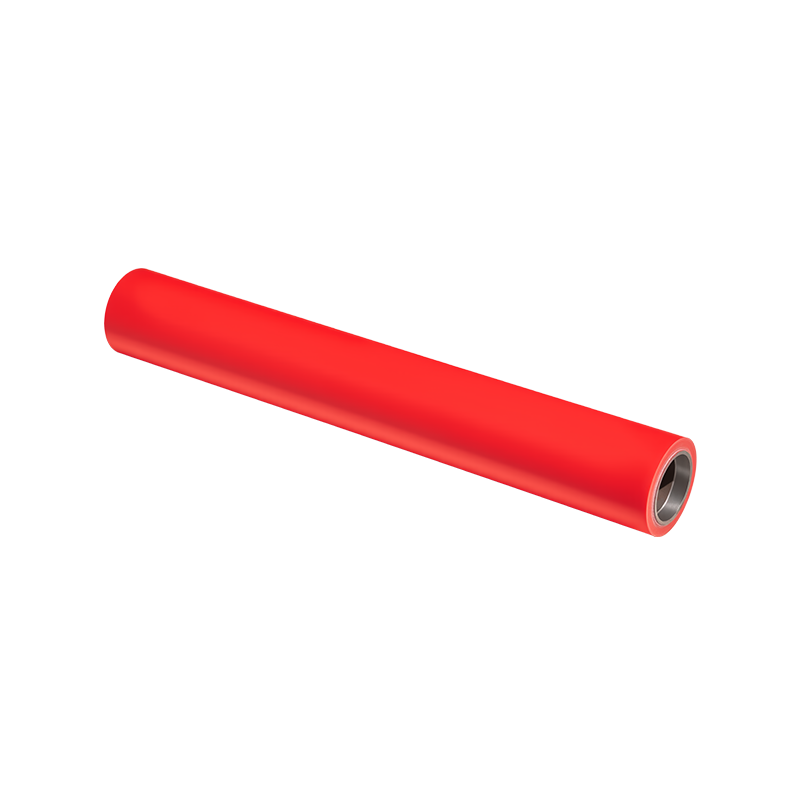
At a basic level, this type of roller is still a rubber-based cylinder used for guiding and supporting material movement. The difference lies in how it handles electrical charge during operation.
Inside the structure, there is a pathway that allows charge to move away instead of staying on the surface. The outer layer stays in contact with the material, while the internal part helps balance electrical buildup.
This combination allows the roller to stay neutral during repeated contact. It does not "store" static in one place. Instead, it slowly releases it during operation.
The surface is also designed with a certain level of texture. It is not completely smooth, and not overly rough either. The goal is to keep contact stable while allowing steady movement.
Different materials behave differently on the same surface. Some slide easily, others need more control. The roller has to work across these differences without changing its basic behavior.
How Static Builds Up During Continuous Transfer
Static does not appear in a single moment. It forms gradually as materials move across surfaces.
Every time a material touches the roller, a small amount of friction happens. When it moves forward and separates, a small charge can remain. Over time, this cycle repeats many times in a short period.
In a continuous system, this looks like:
- material touches roller surface
- movement creates friction
- separation leaves small charge behind
- next contact repeats the same process
If the environment is dry or the movement is fast, the buildup tends to happen more quickly. If conditions are more stable, the effect may stay mild for longer.
Even when the charge is small, it can still influence how the material behaves. It may not be visible at first, but it changes how predictable the movement feels.
Why Static Affects Material Stability
Once static starts to build up, the material does not always move in a clean, straight line. The interaction between the surface and the roller becomes less uniform.
Instead of smooth flow, small changes begin to appear. A sheet may slightly stick before releasing. A film may shift a little during transfer. The alignment may not stay as consistent as before.
Common behaviors include:
- slight pulling toward the roller surface
- uneven feeding at entry points
- small drift in alignment over distance
- irregular release after contact
These effects are usually small at the beginning. Over longer operation, they can become more noticeable, especially in continuous lines.
The system still works, but the movement feels less steady.
How an Anti Static Rubber Roller Controls This Behavior
The main role of the roller is to manage how charge behaves during contact, not to stop movement itself.
As the material passes over the surface, any electrical charge that forms is given a path to move away. It does not stay concentrated at one point. It spreads and gradually reduces during operation.
This creates a more balanced condition on the surface of the roller.
In real use, this often results in:
- fewer sticking points during transfer
- smoother release after contact
- more consistent movement across long runs
- reduced sudden changes in alignment
The effect is not dramatic in a single moment. It becomes more noticeable over time, as the system continues to run.
How Surface Structure Influences Movement Behavior
The surface of the roller plays a quiet but important role in how materials behave.
A smoother surface allows materials to move with less resistance, but it may reduce grip for lighter or more flexible materials. A more textured surface increases control, but it can also create slight resistance if not balanced properly.
This balance is important because different materials respond in different ways.
In practice, three general behaviors can be seen:
- smooth contact: easy movement, lower control
- balanced texture: stable movement, controlled grip
- stronger texture: higher grip, more resistance variation
The goal is not to force one condition for all materials, but to keep movement predictable across different situations.
| Factor | What Happens in Practice |
|---|---|
| Static buildup | Causes slight sticking and misalignment |
| Surface texture | Controls grip and sliding behavior |
| Material type | Changes sensitivity to movement |
| Speed of transfer | Affects vibration and stability |
| Contact pressure | Influences control and deformation |
How Material Type Changes the Way the Roller Works
Different materials respond differently during transfer. This is one of the reasons why the same roller can feel slightly different depending on what is running through the system.
Thin films tend to react quickly to surface changes. Even small static shifts can affect their path. Paper materials are more stable but can still show uneven feeding under unstable conditions. Soft fabrics may respond more to pressure changes during movement.
The roller has to stay consistent while adapting to these differences through contact alone.
This is why material behavior is always part of the overall system performance, not just a separate factor.
How Environmental Conditions Keep Changing Transfer Behavior
Even when the roller system is set up correctly, the surrounding environment keeps influencing how the material moves. It is not something that stops the process, more like a background condition that keeps shifting slowly.
Dry air tends to make things more sensitive. Static builds faster, and the material may start reacting a bit more on the roller surface. It can feel like the sheet or film is slightly more "active," even though nothing in the machine has changed.
When the air feels more balanced, movement usually becomes calmer. The charge does not stay on the surface for long, so the contact between material and roller feels more even.
Temperature shifts also play a part. A warmer space can make flexible materials feel slightly looser, while cooler conditions can make movement feel tighter and less forgiving. These changes are small, but over long runs they become noticeable.
Dust in the environment adds another layer. It does not directly stop the system, but it can slightly change how surfaces meet. A tiny layer between roller and material can make the movement feel less consistent from time to time.
All of this means the roller is never working in isolation. It is always reacting to the surrounding space.
Why Continuous Flow Depends on Small Stability Gains
In long production lines, material does not just move once. It keeps moving through multiple points, one after another. A small irregularity at the start can slowly carry forward and show up later in the process.
When an Anti Static Rubber Roller is working smoothly, the transfer feels more continuous. The material does not need constant correction, and the flow between sections feels less interrupted.
What usually improves in practice is not something dramatic. It is more like fewer small interruptions:
- fewer moments where the material hesitates
- fewer small corrections in alignment
- less variation when moving between rollers
- more even feeding into the next stage
These changes are subtle, but they reduce the need for manual adjustment during operation. Over time, that makes the whole line feel more stable.
What Happens When Static Control Is Not Fully Balanced
When static is not handled well, the system still runs, but the movement becomes less predictable. The material may not follow the same path every time.
Sometimes it sticks slightly, then releases. Sometimes it shifts a little off center before correcting itself. These are not big failures, but they make the flow feel uneven.
Common signs include:
- material drifting slightly during transfer
- uneven spacing between contact points
- occasional sticking on roller surface
- inconsistent release after contact
These effects usually build slowly. They do not appear all at once. At first, they are easy to ignore, but over time they become more noticeable during continuous operation.
The roller still functions, but the movement loses some of its smooth rhythm.
Where Anti Static Rubber Roller Is Commonly Applied
This type of roller is used in many places where material needs to move continuously without losing alignment. It is not limited to one type of production.
It often appears in systems handling:
- thin film and sheet movement
- paper feeding and packaging transfer
- textile and fabric guiding lines
- light coating or surface processing
- flexible material transport stages
In all these environments, the material is sensitive to surface changes. Even small static buildup can affect how it sits on the roller, which is why controlled discharge becomes important during movement.
How Long-Term Use Slowly Changes System Feel
Over time, every roller system changes slightly. It does not stop working, but the way it feels during operation can shift.
The surface may feel a bit different after long use. Contact with materials may not feel exactly the same as it did at the beginning. These are gradual changes, not sudden ones.
Some common long-term behaviors include:
- slight variation in surface smoothness
- small changes in grip behavior
- different response under changing speed
- increased sensitivity to environment
These changes do not remove the function of the roller. They just adjust how it interacts with materials over time.
Regular observation helps keep the system in a steady condition, especially in long running lines.
Why Stability Comes From Small Continuous Control
Stable material transfer is not created by a single strong adjustment. It usually comes from many small controls working together during movement.
Static electricity is one of those quiet factors that affects flow without being obvious. It builds slowly and influences how materials sit on the roller surface.
An Anti Static Rubber Roller helps by keeping that charge from staying in one place. The effect is not dramatic, but it supports a more even movement pattern.
In real operation, that steady behavior is often what keeps the material line running without frequent interruption, especially when conditions in the environment are not perfectly stable.

We specialize in manufacturing aluminum guide rolls, air shafts, steel rolls, rubber rolls, curved rolls, slip shafts, magnetic powder brakes, and other mechanical supporting products.
©2025 Ruian Baixiao Machinery Co., Ltd.

Aluminum Guide Rollers Manufacturer