
 Español
 Deutsch

How Aluminum Guide Roller Uses Non Stick Plasma Treatment
In continuous manufacturing, a roller earns its keep well beyond just holding material up. It steers direction, keeps the feeding path steady, and maintains contact across processing stages — and when the outer surface doesn't match what the job actually demands, small problems tend to creep in over weeks of daily operation rather than showing up all at once.
Residue is usually where it starts. Films, coated products, flexible materials, and processed sheets all leave traces on metal after enough repeated contact, and even a thin layer of buildup changes how the roller interacts with whatever's passing over it — making transport less predictable and cleaning more of a chore.
For industrial users, that adhesion tends to create a familiar set of headaches:
- Buildup on the roller pushes cleaning schedules to happen more often
- Material movement gets less consistent once deposits start accumulating
- Maintenance work ends up cutting into normal production time
- Repeated cleaning itself can wear down the surface over the long run
Aluminum earns its place in roller manufacturing through a solid mix of light weight and mechanical performance, but the raw metal surface doesn't automatically deliver the contact behavior every application needs. Coatings, adhesives, and fine particles left behind after contact create different challenges depending on what's running through the line.
Surface modification is the practical answer here — rather than reworking the entire roller structure, it targets just the outer layer where contact actually happens. Plasma treatment for non‑stick performance has become one established approach for aluminum, adjusting surface characteristics to cut down on unwanted attachment where it matters most.
Why Aluminum's Natural Surface Often Needs Adjusting
Aluminum brings real advantages to industrial use, but its surface straight off the machine doesn't automatically suit every environment it ends up in. Contact behavior comes down to more than just two surfaces touching — texture, cleanliness, and chemical interaction all shape whether a substance sticks around or releases cleanly.
A freshly machined aluminum surface can look perfectly smooth and still carry microscopic irregularities that quietly influence contact behavior over time. Run it long enough, and those tiny characteristics start determining how quickly residue builds up.
Coated materials and dry materials, for instance, put entirely different demands on the same roller. A surface tuned for one process often needs rework the moment the application shifts to something else.
Surface modification, at its core, is about improving the relationship between the roller and whatever's moving across it. For an Aluminum Guide Roller specifically, keeping contact conditions in check matters because too much attachment starts interfering with clean material release and smooth movement.
A few things shape how well a surface actually performs:
- Contact Behavior How material touches and separates from the roller determines whether residue stays behind afterward. A modified surface creates a more workable interaction between the two.
- Surface Energy Adjustment Changes at the outer layer shift how liquids, coatings, and other substances spread and cling. Tuning this characteristic cuts down on bonding that shouldn't be happening during normal operation.
- Working Environment Compatibility Temperature, cleaning routines, the materials in production, and general operating conditions all factor into whether a given surface solution holds up as expected.
Plasma treatment works by altering aluminum's outer characteristics directly, rather than layering something bulky on top of it. That distinction matters because roller dimensions stay untouched — precise size and shape remain critical for alignment and movement accuracy, and a coating that adds thickness risks throwing that off.
How Plasma Treatment Changes the Roller‑Material Relationship
Roller and material are in constant contact throughout production, and the quality of that interaction decides whether things move smoothly or start fighting resistance.
A surface with a strong pull toward certain substances collects residue over time, and once deposits show up, they start shaping every contact that follows. Plasma treatment steps in here, adjusting the outer surface to reduce that unwanted pull between roller and material.
The practical logic breaks down into a few pieces:
- Surface condition adjustment — treatment changes the outer layer's characteristics, creating a genuinely different contact environment.
- Reduced residue attachment — materials that used to cling now separate more readily during normal movement.
- Improved maintenance conditions — less buildup translates directly into cleaning that's simpler to manage on a routine basis.
How much any of this helps depends heavily on the application itself, not just the treatment method in isolation. A packaging material carrying adhesive properties needs something quite different from a dry textile product moving through the same line. Understanding the actual production process is really what determines whether a given surface solution is the right fit.
Worth noting too — a properly treated surface isn't about eliminating contact entirely. Rollers still need controlled contact to guide and support material as it moves. The goal is balance: letting material move efficiently without sticking where it shouldn't.
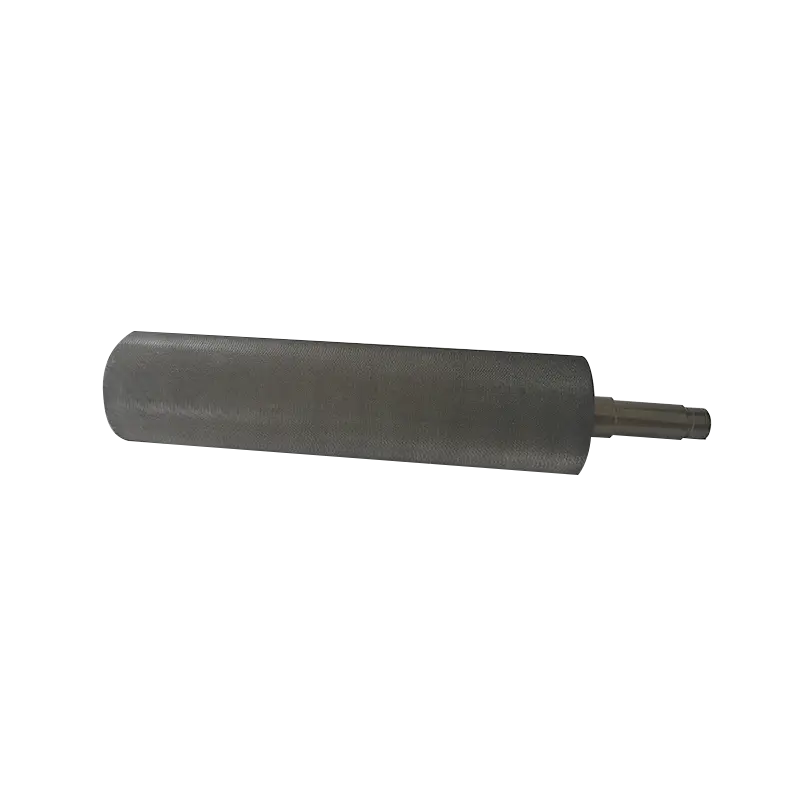
How Plasma‑Treated Aluminum Guide Rollers Perform Across Different Processes
Industrial applications rarely deal with identical material surfaces, so roller requirements shift considerably from one production line to the next.
Flexible material processing puts a premium on stable guidance as thin products move through multiple stages. Residue on the roller throws off positioning and adds cleaning demands nobody wants — a modified surface keeps contact conditions steadier throughout.
Printing brings its own set of headaches. Coatings and inks transfer during movement almost inevitably, and surface modification cuts down that buildup, keeping the guiding area cleaner across long production runs.
Packaging production covers a wide range of material structures, and plenty of those products carry adhesive layers or coatings that grab onto untreated metal aggressively. A non‑stick surface approach manages that interaction directly, keeping repeated contact from turning into a maintenance problem.
Textile handling deals with fibers and particles that latch onto surfaces during transport. Easier cleaning here keeps regular operation running without constant maintenance interruptions.
| Application Field | Common Surface Concern | Purpose of Surface Modification |
|---|---|---|
| Film Processing | Residue after repeated contact | Improve material release conditions |
| Printing Process | Transfer of coatings or inks | Reduce unwanted buildup |
| Packaging Production | Adhesive material attachment | Adjust surface interaction |
| Textile Handling | Fiber or particle accumulation | Support easier maintenance |
Different industries often run into surprisingly similar adhesion problems, even though the root causes rarely match up exactly. Picking the right surface treatment really comes down to weighing material characteristics, operating environment, and maintenance needs together — not treating any one factor as the whole answer.
How Non Stick Surface Design Helps Reduce Daily Operation Problems
Material adhesion does not always appear as a major failure at the beginning of production. In many cases, small amounts of residue gradually collect on the working area and influence later processing conditions. For equipment that runs continuously, small surface changes may create repeated maintenance tasks.
A suitable non stick surface design focuses on controlling the interaction between the roller and the processed material. Instead of completely preventing contact, the purpose is to make separation easier after the material passes through the guiding area.
Several practical improvements may come from a properly selected surface condition:
- Lower residue accumulation
Materials with coatings or adhesive characteristics may leave fewer unwanted traces on the roller surface, helping maintain a cleaner working area. - Simpler cleaning procedures
When residues are less likely to attach strongly, routine cleaning can become easier to manage and may require less effort during maintenance periods. - More stable material movement
A cleaner contact area helps reduce changes caused by uneven buildup, allowing materials to move through the production line with fewer surface‑related interruptions. - Better surface protection during repeated use
Reducing the need for aggressive cleaning methods can also help maintain the condition of the roller surface.
However, non stick performance should not be considered separately from the actual production process. Some applications require a certain level of friction to keep materials positioned correctly. A surface that reduces attachment too much may not provide the contact condition needed for stable transportation.
For this reason, surface design involves finding a suitable balance between release performance and guiding ability. The working environment, material type, and operating requirements all influence the final selection.
How Manufacturers Evaluate Whether Plasma Treatment Fits Roller Applications
Choosing a surface modification method requires more than considering whether a material has adhesion problems. A complete evaluation usually starts with understanding how the roller works inside the production system.
Different factors may influence the suitability of plasma treatment:
Material Characteristics
The processed material plays an important role in surface selection. Films, coated sheets, fabrics, and packaging materials may have different contact behaviors. A solution suitable for one material may not provide the same results with another.
Important considerations include:
- Whether the material contains adhesive components
- Whether residue appears during continuous movement
- Whether the surface of the material is sensitive to contact changes
Operating Conditions
The surrounding production environment can affect surface performance. Temperature changes, cleaning methods, and contact frequency may influence how the treated surface behaves during use.
A roller working in a dry environment may face different requirements compared with one operating in an area where coatings or liquids are frequently present.
Roller Structure and Design
Surface treatment works together with the physical design of the component. Factors such as roller shape, surface finish, and installation position can influence material movement.
For an Aluminum Guide Roller, maintaining proper dimensions and surface consistency remains important because guiding accuracy depends on the relationship between the roller and the moving material.
Maintenance Requirements
Production teams also need to consider daily maintenance habits. A surface solution should match the available cleaning methods and service conditions. Easy maintenance does not come only from surface properties but also from selecting a treatment that fits the entire production process.
| Evaluation Area | Questions to Consider | Influence on Surface Selection |
|---|---|---|
| Material Type | Does the material leave residue during movement? | Determines adhesion control needs |
| Working Environment | Are temperature or cleaning conditions changing? | Affects treatment suitability |
| Roller Design | Does the surface match the guiding requirements? | Influences movement stability |
| Maintenance Process | How is routine cleaning performed? | Affects long‑term usability |
A careful evaluation helps avoid choosing a surface technology based only on one production issue. The relationship between the roller, material, and operating environment needs to be considered together.
How Surface Technology Influences Future Roller Design Requirements
Industrial production continues to place different demands on components that support material movement. Lightweight structures, stable operation, and easier maintenance are becoming important considerations during equipment design.
Aluminum remains suitable for many roller applications because of its balance between weight and mechanical characteristics. Adding functional surface modification allows manufacturers to adjust the outer performance of the component according to specific processing needs.
Future development of roller surfaces may focus on several directions:
- More application‑specific solutions
Different industries may require different surface behaviors rather than a single treatment approach. Customized solutions based on material properties can help match changing production conditions. - Better compatibility with modern materials
As processed materials continue to change, roller surfaces may need to handle new contact conditions, including different coatings and composite structures. - Greater attention to maintenance efficiency
Production systems often require components that are easier to maintain. Surface technologies that help reduce residue problems may become an important part of equipment planning. - Combination of lightweight design and functional surfaces
Future roller development may continue combining aluminum structures with surface modification methods to meet different industrial requirements.
The role of surface treatment is not limited to improving one single performance factor. It represents a connection between material science, equipment design, and production needs. A suitable surface approach depends on understanding the complete working process rather than focusing on one isolated condition.
For applications where material attachment affects operation, Non Stick Plasma Treatment provides a way to adjust the outer characteristics of aluminum components while keeping the original structure unchanged. Through proper selection and application, surface modification can support more stable interaction between rollers and processed materials in different industrial environments.

We specialize in manufacturing aluminum guide rolls, air shafts, steel rolls, rubber rolls, curved rolls, slip shafts, magnetic powder brakes, and other mechanical supporting products.
©2025 Ruian Baixiao Machinery Co., Ltd.

Aluminum Guide Rollers Manufacturer