
 Español
 Deutsch

Hardness, Grip, and Longevity of Rubber Roller
The Role of Shore Hardness in Performance
Shore hardness is one of the decisive specifications when designing industrial rollers. A professional Rubber Roller Factory typically evaluates hardness at the earliest stage because it directly influences both traction capability and service life. Hardness determines how much the rubber surface deforms under load, how heat is generated during operation, and how quickly wear occurs.
- Shore A scale measurement: Indicates resistance to indentation; lower values mean softer rubber.
- Deformation behavior: Controls how the roller adapts to substrate surfaces.
- Stress response: Affects internal strain and fatigue resistance over time.
Choosing the correct hardness is therefore not just about grip, but about long-term operational stability.
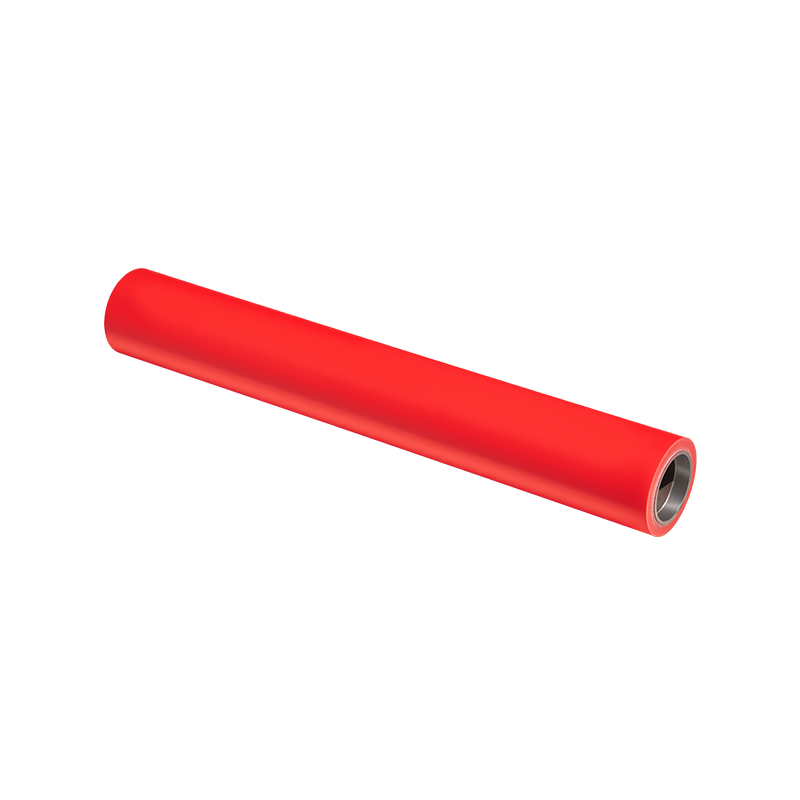
Softer Rollers: Enhanced Grip Performance
Lower Shore hardness generally improves traction due to increased flexibility and surface conformity.
- Expanded contact area: Soft rubber compresses more easily, increasing real contact with the material.
- Higher adhesive friction: Closer surface interaction enhances molecular attraction forces.
- Improved vibration absorption: Elastic materials dampen shock and maintain steady contact at varying speeds.
These advantages make softer rollers suitable for smooth films, paper, textiles, and lightweight materials. However, softness also introduces durability challenges:
- Accelerated abrasion: Soft compounds wear faster in abrasive environments.
- Greater heat buildup: Repeated deformation creates internal hysteresis heat.
- Compression set risk: Prolonged pressure may cause permanent surface flattening.
While softer rollers improve grip, they may require more frequent maintenance or replacement.
- Harder Rollers: Improved Durability and Stability
Higher Shore hardness enhances structural integrity and extends operational life in demanding conditions. Many engineers rely on a Rubber Roller Factory for customized hardness solutions when longevity is a priority.
Better wear resistance: Harder surfaces withstand friction and abrasion more effectively.
- Reduced deformation: Maintains consistent geometry under heavy loads.
- Lower internal heat generation: Less flexing reduces thermal stress.
However, harder rollers may reduce peak traction:
- A smaller effective contact area can limit friction.
- Higher slip potential on smooth substrates.
- Greater dependence on applied pressure to maintain grip.
- Thus, durability improves with hardness, but traction must be carefully evaluated.
Balancing Grip and Service Life
Grip strength and lifespan often have a trade-off relationship.
- Soft compounds: Deliver stronger immediate traction but shorter service intervals.
- Hard compounds: Provide a longer lifespan but may sacrifice some gripping efficiency.
- Medium hardness (typically 50–70 Shore A): Often achieves the balance between conformity and wear resistance.
Selecting this middle range frequently ensures stable traction while maintaining acceptable durability in high-speed or continuous operations.
Factors That Influence Suitable Hardness
The ideal hardness depends on real-world operating variables rather than theoretical preference.
- Substrate characteristics: Smooth or coated materials benefit from softer rollers, while rough surfaces tolerate harder compounds.
- Operating speed: High-speed lines increase heat generation, favoring moderate hardness to reduce fatigue.
- Load intensity: Heavy loads require sufficient hardness to prevent excessive compression.
- Environmental conditions: Elevated temperatures can effectively soften rubber during use.
Evaluating these factors helps prevent premature failure while maintaining a reliable grip.
Rubber roller hardness directly determines both traction performance and service life. Softer materials enhance grip through increased surface conformity and friction, but may experience faster wear and heat buildup. Harder materials improve durability and dimensional stability while potentially reducing peak traction. The effective solution lies in balancing Shore hardness according to load, speed, substrate type, and environmental conditions. A carefully optimized hardness level ensures a strong grip, an extended lifespan, and consistent performance across industrial applications.

We specialize in manufacturing aluminum guide rolls, air shafts, steel rolls, rubber rolls, curved rolls, slip shafts, magnetic powder brakes, and other mechanical supporting products.
©2025 Ruian Baixiao Machinery Co., Ltd.

Aluminum Guide Rollers Manufacturer