
 Español
 Deutsch

Bearing Choices Affect Guide Roller Performance
Guide Roller Manufacturer often emphasize bearing selection as a key factor affecting roller performance.
Bearings determine the smoothness, load capacity, durability, and maintenance requirements of guide rollers.
Common bearing types include sealed bearings, deep groove ball bearings, and sometimes tapered roller or needle bearings, each with unique characteristics.
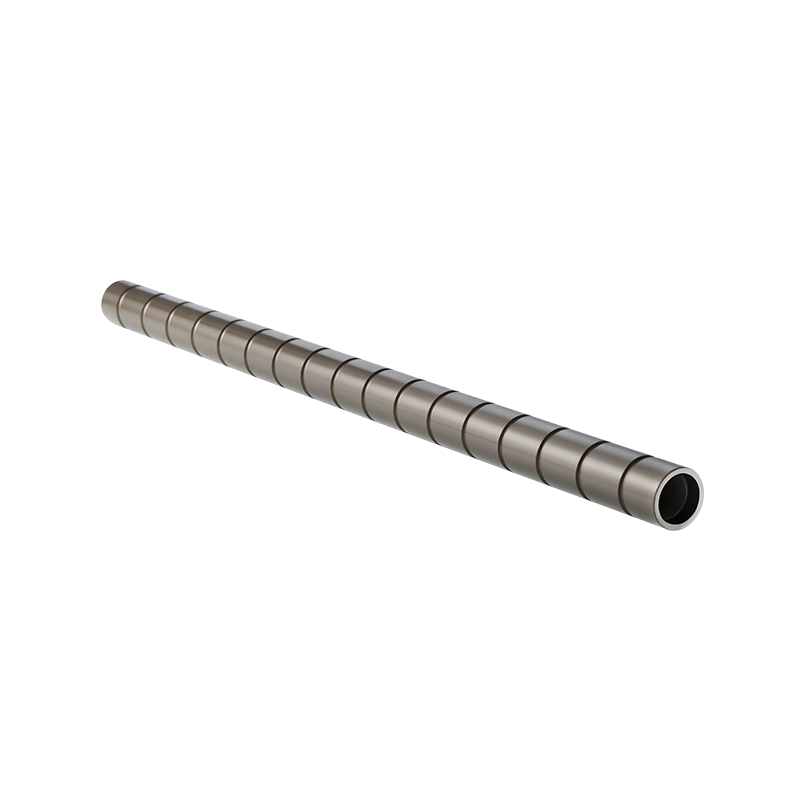
Sealed Bearings: Protection and Longevity
- Definition: Sealed bearings have integrated seals to prevent contaminants like dust, dirt, and moisture from entering.
- Performance Advantages:
- Reduced maintenance due to built-in lubrication.
- Increased operational lifespan in harsh environments.
- Smooth rotation even under high-speed conditions with minimal friction increase.
- Limitations:
- Slightly higher cost than open bearings.
- May have lower speed ratings compared to precision deep groove bearings in some applications.
- Applications:
Suitable for outdoor conveyors, dusty industrial environments, and facilities with minimal maintenance access.
- Deep Groove Ball Bearings: Precision and Versatility
- Definition: Deep groove ball bearings have a simple, open design that supports radial and axial loads effectively.
Performance Advantages:
- Good for high-speed applications due to low-friction design.
- Capable of handling moderate axial and radial loads simultaneously.
- Typically lower cost than fully sealed or specialty bearings.
- Limitations:
- Requires periodic lubrication to maintain performance and longevity.
- Susceptible to contamination if used in dusty or wet conditions.
- Applications:
Ideal for clean manufacturing lines, packaging machinery, and high-speed indoor conveyors.
Load Capacity and Performance Differences
- Radial Load Handling:
- Deep groove ball bearings usually handle moderate radial loads efficiently, suitable for light to medium conveyor systems.
- Sealed bearings can sustain similar loads but benefit from additional protection against debris, which prevents early failure.
- Axial Load Handling:
- Deep groove bearings manage light axial loads; for heavy axial forces, tapered or angular contact bearings may be preferable.
- Sealed bearings are generally optimized for balanced radial-axial loads depending on design.
Speed and Friction Considerations
- High-Speed Operation:
- Deep groove ball bearings excel at high-speed rotation due to lower internal friction.
- Sealed bearings may have slightly higher friction due to seals, but still maintain good speed performance in moderate-speed lines.
- Energy Efficiency:
- Bearings with lower friction reduce the energy consumption of conveyor motors, improving overall system efficiency.
- Selecting the correct bearing type can significantly influence operational energy costs in large-scale systems.
Maintenance and Reliability
- Maintenance Requirements:
- Sealed bearings require minimal maintenance; lubrication is typically sealed within the bearing.
- Deep groove ball bearings need periodic lubrication and inspection for contamination.
- Reliability in Harsh Environments:
- Sealed bearings provide good protection in wet, dusty, or chemical-prone environments.
- Open deep groove bearings perform in clean indoor conditions with scheduled maintenance.
- Lifecycle Comparison:
- Sealed bearings generally offer a longer operational lifespan due to protection against external elements.
- Deep groove ball bearings can achieve similar life spans in clean, well-maintained systems.
Application Recommendations
- Guide Roller Manufacturer Guidance:
- For high-speed indoor lines in clean environments, deep groove ball bearings are often sufficient.
- For outdoor conveyors, dusty production lines, or areas with high humidity, sealed bearings are recommended to reduce maintenance and prevent contamination.
- Custom Solutions:
- Some guide rollers combine sealed deep groove ball bearings for both precision and protection.
- Selection should consider load, speed, environment, and expected maintenance intervals.
Bearing selection is a critical factor in guide roller performance. A Guide Roller Manufacturer must consider environmental conditions, load requirements, speed, maintenance schedules, and cost when choosing between sealed bearings and deep groove ball bearings. Sealed bearings provide good protection and longevity in harsh conditions, while deep groove ball bearings offer precision, high-speed efficiency, and cost-effectiveness in clean environments. Selecting the appropriate bearing type ensures suitable performance, reduces downtime, and improves conveyor system reliability.

We specialize in manufacturing aluminum guide rolls, air shafts, steel rolls, rubber rolls, curved rolls, slip shafts, magnetic powder brakes, and other mechanical supporting products.
©2025 Ruian Baixiao Machinery Co., Ltd.

Aluminum Guide Rollers Manufacturer