
 Español
 Deutsch


Which Surface Treatments Make Industrial Steel Rollers More Resistant to Corrosion and Wear?
Industrial steel rollers work under steady mechanical stress, and they run into moisture, chemicals, dust, abrasive material — sometimes all of it at once. Give that enough time and you get rust, surface damage, dimensional drift, and performance that quietly gets worse. For manufacturers and maintenance crews, the surface treatment is where you either buy yourself years of service or sign up for repeated replacement.
Each treatment lands differently on corrosion protection, surface hardness, and friction. What fits depends on the working environment, contact pressure, running speed, and how much dimensional change the roller can tolerate.
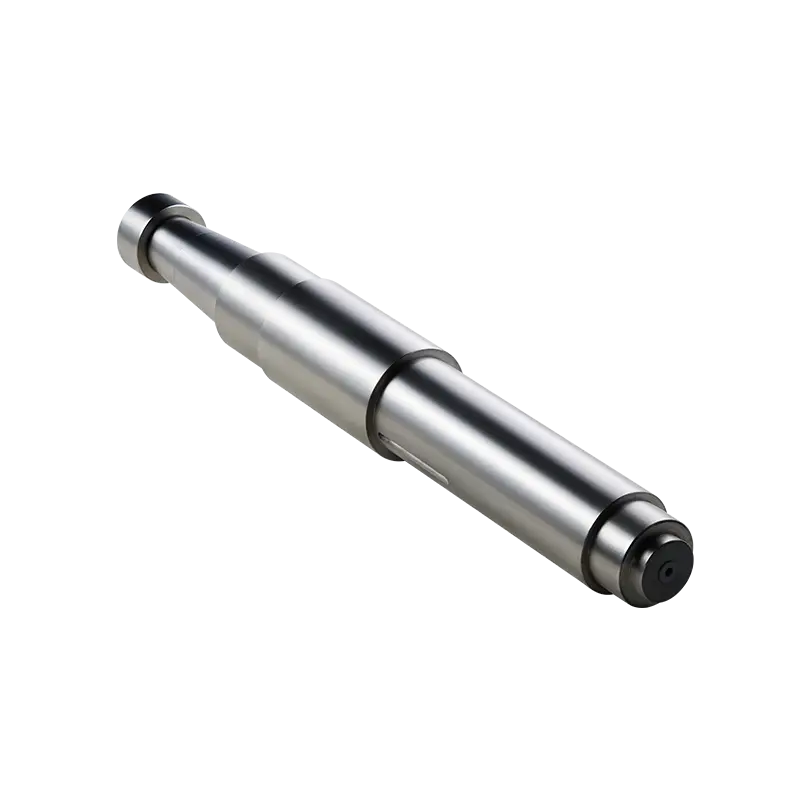
Why Surface Treatment Matters for Industrial Steel Rollers
Steel carries load well. Untreated surfaces, though, corrode the moment moisture and oxygen show up. Add repeated contact with other parts or abrasive particles and material starts coming off the working surface.
Treatments tackle this in different ways. Some put a barrier between the metal and whatever it's exposed to. Others harden the steel itself so it holds up against wear. A few coatings do a bit of both — but how well they perform comes down to the material, the application process, and the conditions in service.
Before picking anything, name the risk you're actually dealing with: corrosion, abrasive wear, friction, or repeated mechanical loading. That step saves you from paying for a coating that never touched the real cause of failure.
Comparing Common Surface Treatments for Steel Rollers
| Surface treatment | Corrosion protection | Wear resistance | Suitable applications |
|---|---|---|---|
| Zinc plating | Good in suitable environments | Low to moderate | General industrial parts with limited abrasion |
| Hot-dip galvanizing | Good for many outdoor environments | Moderate | Exposed steel with less demanding precision needs |
| Electroless nickel plating | Good when properly specified | Moderate to high, depending on grade | Precision rollers in moisture or selected chemicals |
| Hard chrome plating | Good under appropriate conditions | High surface hardness | Applications needing a hard, low-friction surface |
| HVOF thermal spray coating | Depends on coating composition | Very high for suitable carbide coatings | Heavy-duty rollers under severe abrasion |
| Nitriding or induction hardening | Limited direct corrosion protection | High surface hardness | Rollers needing resistance to surface deformation |
These are general comparisons, not guaranteed ratings. Coating thickness, surface prep, substrate quality, and operating conditions all shift the result.
Zinc Plating and Galvanizing for Corrosion Protection
Zinc-based treatments work by putting a barrier between the steel and its surroundings. Zinc also gives sacrificial protection, shielding exposed steel in certain conditions.
Electroplating lays down a fairly thin coating. It tends to suit indoor industrial use where exposure and abrasion are limited, and it gets considered when cost, appearance, and dimensional control matter.
Hot-dip galvanizing builds a thicker layer with durable atmospheric protection. The catch: that thickness can interfere with close-fitting parts and precision dimensions.
Neither suits every working surface. Constant friction or abrasion strips the zinc away and leaves the steel exposed. Check dimensional tolerances, and confirm the treatment fits the contact conditions.
Electroless Nickel for Combined Protection
Electroless nickel deposits a nickel-phosphorus alloy through a chemical process — no external current involved, which is why coverage stays fairly uniform across complex shapes and awkward recesses.
Depending on composition, thickness, and heat treatment, it can offer corrosion resistance, hardness, and decent wear performance. It suits precision Industrial Steel Rollers running in humid conditions or meeting certain chemicals.
Performance varies by grade, so specify the chemical exposure, thickness, finish, and tolerances you expect. Get supplier documentation confirming the coating is compatible with the application.
Hard Chrome and Thermal Spray Coatings for Heavy Wear
Hard chrome has a long history on industrial parts that need a hard, low-friction surface. It holds up in demanding mechanical work, provided it's applied properly and stays intact.
Production, though, can involve hazardous chromium compounds, so environmental compliance and worker protection sit high on the list. Look at applicable regulations and the alternatives before specifying it.
For severe abrasion or high contact stress, high-velocity oxy-fuel (HVOF) thermal spray coatings are another route. Suitable carbide coatings resist wear well, though they generally need specialized equipment, controlled application, and sometimes precision grinding afterwards.
Both cost more up front. They earn their place when reduced wear and longer service life outweigh the processing bill and the downtime.
Nitriding and Induction Hardening for Surface Strength
Some treatments harden the steel instead of adding a conventional coating.
Nitriding drives nitrogen into the surface of suitable steel grades to form a hardened layer. Induction hardening heats localized areas, then cools them quickly to harden selected zones.
Both improve resistance to surface deformation and certain kinds of wear, and both suit rollers where high surface hardness and tight dimensional control matter.
They don't automatically bring corrosion protection along. Rollers seeing water, salt, or aggressive chemicals usually need a separate protective system. Steel grade, hardness depth, load, and heat-treatment requirements all need checking.
How to Select the Right Surface Treatment
Start with the operating environment and the damage you've been seeing. Rollers in humidity or chemicals lean toward corrosion protection; those handling abrasive material lean toward a hard wearing surface.
Then pin down the functional requirements — diameter, surface roughness, load, speed, and how much dimensional change is acceptable. Ask about coating thickness, adhesion, hardness, surface prep, and quality control.
Then weigh total ownership cost: treatment price, maintenance frequency, expected service life, and what downtime actually costs you. A pricier coating can be the better value when replacement is awkward or repeated failures keep stopping production.
Extend Roller Service Life With the Right Treatment
Zinc-based treatments give economical corrosion protection where conditions suit them. Electroless nickel pairs uniform coverage with protective performance. Hard chrome and selected thermal spray coatings handle demanding wear. Nitriding and induction hardening come into play when surface hardness is the point.
Which one fits depends on the roller material, operating conditions, and the failure mechanism you're likely to hit. Define requirements you can measure, confirm treatment quality with the supplier, and roller durability improves while avoidable maintenance costs drop.

We specialize in manufacturing aluminum guide rolls, air shafts, steel rolls, rubber rolls, curved rolls, slip shafts, magnetic powder brakes, and other mechanical supporting products.
©2025 Ruian Baixiao Machinery Co., Ltd.

Aluminum Guide Rollers Manufacturer