
 Español
 Deutsch

How to Choose an Aluminum Guide Roller for High-Speed Production Lines
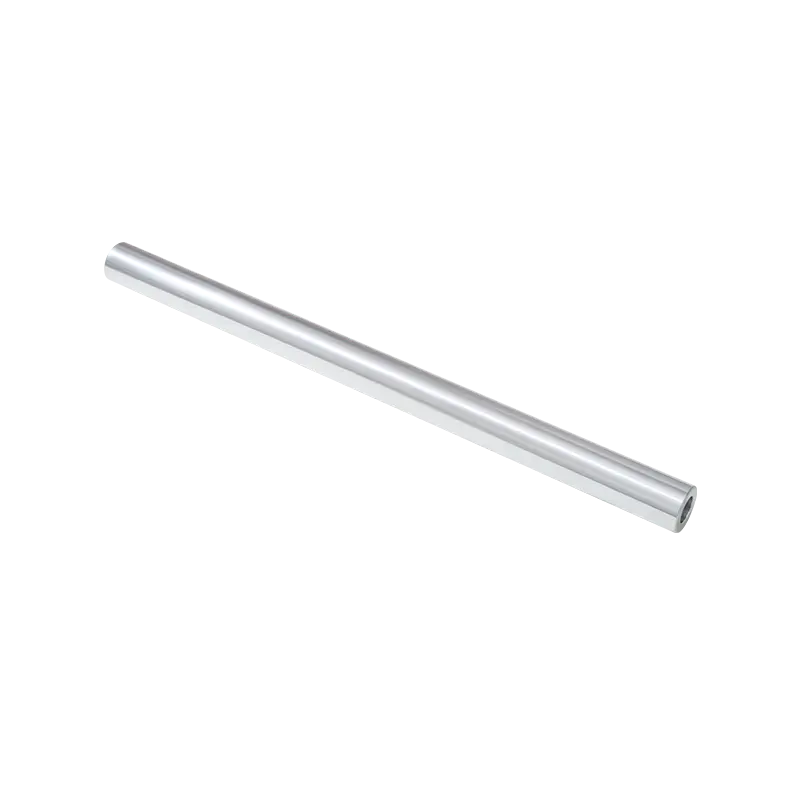
Aluminum guide rollers pull films, paper, textiles and other continuous webs through production lines. At high speeds, small issues can snowball into real production problems fast. Vibration, misalignment, or a poorly matched surface can cause wrinkles, slipping, and tracking errors before you know it.
Picking the right roller is about far more than matching dimensions. Alloy grade, operating speed, surface finish, bearings, and machining accuracy all play a part. Working through these details before reaching out to suppliers helps you clarify what your machine needs, and gives vendors a clear baseline to quote from.
Start with Your Production Requirements
First, map out your web material and machine setup. Plastic film needs a smooth contact surface to avoid scratches and wrinkles. Textile lines call for gentler handling, since some fibers stretch or mark easily. Printing and packaging lines rely on steady movement to keep the web aligned.
Speed matters too. At higher rotational speeds, even minor balance or alignment errors can create noticeable vibration. A roller that worked fine on a slower line shouldn’t be swapped onto a faster one without a second look.
Before asking for quotes, pull together:
- Maximum operating speed
- Roller diameter and face length
- Web material type and thickness
- Expected load and web tension
- Mounting dimensions and installation space
- Operating temperature and working environment
Pick a Suitable Aluminum Alloy
Aluminum is widely used for guide rollers because it’s lightweight, easy to machine, and resists corrosion in most factory settings.
Different alloys bring different properties, so your choice should line up with roller design, load, and manufacturing method.
| Aluminum alloy | Main characteristics | Typical consideration |
|---|---|---|
| 6061 | Good strength, machinability, and corrosion resistance | General industrial applications |
| 6063 | Good extrusion properties and surface finish | Some extruded roller designs |
| Higher-strength alloys | Greater strength under suitable conditions | Verify machinability and corrosion resistance |
6061 is a solid starting point for many uses, but it’s not one-size-fits-all. A long, thin-walled roller faces very different demands than a short, solid one. Talk through load and dimensions with your supplier, weighing tradeoffs between strength, weight, machining needs, and cost.
Check Dynamic Balance and Runout
Dynamic balance makes a real difference when a roller spins fast. If mass is unevenly distributed around the axis, vibration will build up as speed climbs.
Runout is another key check—it measures how far the rotating surface deviates from its intended path. Too much runout causes uneven web contact, which throws off tracking and tension.
Ask your supplier about balancing grades, radial runout, shaft concentricity, and inspection procedures. Required tolerances depend on roller size, speed, mounting, and application. For high-speed setups, ask if balancing is redone after shafts and end caps are fitted.
Evaluate Surface Finish and Treatment
The roller surface directly affects friction, tracking, and wear. If the finish doesn’t match your web material, the web may slip or pick up scratches. Plastic film and coated paper usually need a smooth surface, while other processes may call for light texture for better grip.
Surface treatment should match the job. Anodizing is commonly used to boost aluminum’s surface hardness and corrosion resistance. Other coatings work for applications with specific friction or wear requirements.
A roller handling delicate film needs a finish that won’t mark the product. One in a humid or dusty environment may need different protection. Before production starts, confirm surface roughness, coating type, and acceptable defect limits.
Get the Roller Dimensions Right
Diameter, face length, and wall thickness all affect stiffness, weight, and rotational behavior.
A roller that’s too flexible may bend under load, creating uneven web contact. Extra wall thickness adds weight and rotational inertia, straining the drive system. Long rollers need extra attention, since deflection grows as the unsupported span increases.
| Design factor | Potential concern | What to check |
|---|---|---|
| Diameter | Insufficient stiffness or poor contact geometry | Speed and material requirements |
| Wall thickness | Deflection or unnecessary weight | Load and roller structure |
| Length | Bending and uneven tracking | Support spacing and load distribution |
| Shaft dimensions | Poor mounting or bearing fit | Tolerances and interface fits |
The right dimensions depend on operating conditions. Engineering calculations help pin down stiffness requirements; testing may be worthwhile for demanding applications. If replacing an existing roller, send the drawing and note any current issues.
Consider Bearings and Mounting Accuracy
Bearings carry the operating load while letting the roller spin freely. Even a well-machined roller can underperform if its bearings are poorly matched or fitted wrong.
Selection should account for speed, radial load, lubrication, temperature, and contamination risks. An incorrect shaft fit or misaligned bearing increases friction and heat, shortening service life.
When requesting a quote, confirm whether bearings, shafts, end caps, and assembly are included. For high-speed applications, ask if the assembled roller needs balancing and whether inspection records are provided.
Review Manufacturing Quality and Supplier Capabilities
Roller performance comes down to material selection, machining, assembly, surface treatment, and inspection. Ask if the supplier has built rollers for similar equipment, and if they can meet your alloy, finish, and tolerance requirements.
Common inspection points include diameter, length, runout, shaft dimensions, concentricity, and surface condition. Some projects also require material certificates or balancing records. Ask how critical dimensions are measured before shipment.
Price matters, but it shouldn’t be the only comparison point. A cheaper roller that needs constant adjustment or early replacement can cost more over time. Factor in service life, maintenance needs, and whether the supplier will work through technical details with you. A quick chat about production targets and material sensitivity can help clarify which specs deserve extra focus before you finalize the order, especially when handling costly or delicate materials.
Match the Roller to the Job
Choosing an aluminum guide roller for a high-speed line means balancing weight, strength, accuracy, surface quality, and rotational stability.
Before ordering, provide accurate drawings and spell out operating speed, load, and surface requirements. Agree on critical tolerances and inspection methods before machining starts. A roller built around these details will help maintain reliable tracking, reduce vibration, and cut down on avoidable day-to-day maintenance.

We specialize in manufacturing aluminum guide rolls, air shafts, steel rolls, rubber rolls, curved rolls, slip shafts, magnetic powder brakes, and other mechanical supporting products.
©2025 Ruian Baixiao Machinery Co., Ltd.

Aluminum Guide Rollers Manufacturer