
 Español
 Deutsch

How Does Aluminum Guide Roller Improve Material Movement Stability
In many handling lines, movement looks simple from the outside, but inside the system it is rarely completely steady. Materials may drift slightly, tilt a bit, or shift their path when passing from one section to another. These changes are usually small, yet they can build up and affect how smooth the overall transfer feels.
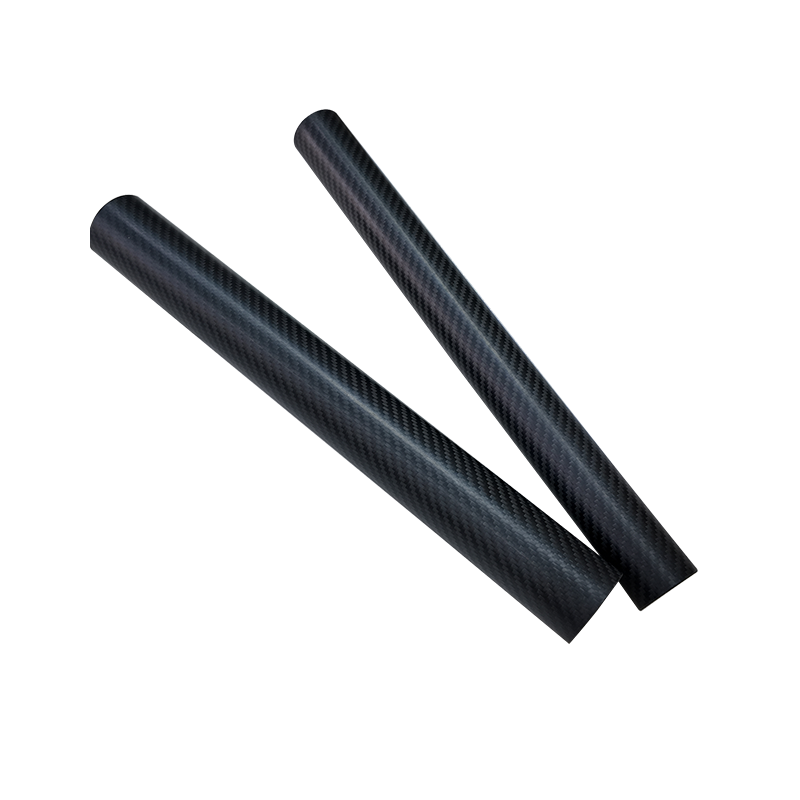
Aluminum Guide Roller is often placed in these routes to reduce that kind of inconsistency. In equipment layouts used in material transport and processing fields, including systems related to Ruian Baixiao Machinery Co., Ltd. , rollers like this are commonly used as quiet supporting parts that help keep movement under control without changing the main driving method.
Movement inside a handling system is affected by many small conditions happening at the same time. Most of them are not obvious when looking at the system as a whole, but they become noticeable during continuous operation.
Typical situations include materials entering slightly off-center, surfaces not touching in a perfectly even way, or weight shifting as items move forward. There is also vibration that naturally appears when parts are running for long periods.
Individually, these conditions are not severe. The issue comes from how they interact. When several small shifts happen together, the path of movement can slowly lose its steady direction.
That is where guiding parts become useful. They do not force movement, but they reduce the chance of drift increasing over time.
Structural Characteristics of Aluminum in Roller Design
Aluminum is commonly used in roller construction because it behaves in a balanced and predictable way during motion. It is light enough to reduce pressure on rotating parts, yet still firm enough to hold shape under continuous use.
In practical conditions, aluminum rollers tend to behave in a stable manner during rotation. They do not easily deform under normal contact, and they can be fitted into different structures without much difficulty.
Another practical point is surface behavior. When the surface stays even, materials pass across it without noticeable interruption. When the surface becomes uneven, even slightly, movement can start to feel less consistent.
This is why surface condition and material stability are closely linked in real operation.
Functional Role of Guide Rollers in Movement Systems
Guide Rollers work in a simple but important way. They sit along the path of movement and influence direction through contact rather than force.
Instead of pushing materials, they help guide them by controlling how contact happens. This makes them useful in areas where movement needs a bit of correction rather than full control.
In many systems, they help materials stay closer to a planned direction, reduce sideways drifting, and make transitions between sections feel smoother. They are often placed where movement naturally becomes unstable, such as connection points between different parts of a system.
Their role is more about correction than action.
Contact Behavior Between Roller Surface and Materials
When materials pass over a roller, the way the surfaces touch each other has a direct effect on movement quality. This contact is not static. It changes as the material moves forward.
In normal conditions, pressure spreads across the roller surface instead of staying at one point. This helps reduce sudden shifts in direction. Sliding movement is also replaced by rolling contact, which is easier to control.
Small vibrations can be reduced through rotation, and changes in direction become less sharp. When the surface is consistent, this process feels smoother. When the surface is uneven, movement may start to feel less stable even if the system itself has not changed.
Contribution to Continuous Flow Conditions
In a connected system, materials need to move from one section to another without unnecessary interruption. Even small pauses or changes in direction can affect how the next stage behaves.
Guide Rollers help reduce these interruptions by supporting smoother transfer between sections. They allow materials to pass through connection points without sudden change in motion.
This also helps keep movement aligned across different parts of the system. Instead of correcting direction after a shift occurs, the roller helps reduce the chance of the shift happening in the first place.
In this way, movement becomes more continuous, even when the system layout includes multiple transitions.
Stability in Repeated Movement Conditions
When movement repeats over and over, small differences tend to appear. These differences may come from vibration, contact variation, or slight changes in alignment.
At first, they are barely noticeable. But over time, they can affect how consistent the movement feels.
Guide Rollers help reduce this gradual change by keeping contact behavior more uniform. Rotation stays closer to the same pattern, and materials tend to follow a more predictable path each time they pass through.
Instead of correcting large errors, the roller helps prevent small inconsistencies from growing into larger movement shifts.
Resistance During Material Transfer
Every system that moves materials will have some level of resistance. It comes from contact between surfaces and the natural friction created during movement.
Guide Rollers reduce the effect of this resistance by changing the type of contact. Instead of sliding across a surface, materials move through rolling contact.
This makes movement feel less restricted. Direction changes can happen more naturally, and movement under different load conditions becomes easier to manage.
The resistance is still present, but its influence on movement stability is reduced, which helps the system run in a more controlled way.
When a handling system runs for a long time, movement issues rarely come from a single obvious point. More often, they build up quietly across different sections. A slight change in angle here, a bit of uneven contact there, and over distance the path no longer feels as steady as it did at the beginning. Guide Rollers made from aluminum are usually introduced into this kind of structure to keep those small shifts from spreading too far.
Alignment behavior across connected sections
Once materials move through more than one stage, alignment is no longer only about one section being correct. It becomes a chain effect. If the entry into one section is slightly off, the next section may repeat that deviation instead of fixing it.
A roller does not “correct” alignment in an active sense. What it does is limit how easily the deviation continues. The material is kept in light contact with a guided surface, which reduces the freedom of sideways movement without locking it in place.
In practice, this shows up as:
- Movement staying closer to the same central path even after multiple transfers
- Small directional drift not carrying forward as strongly between sections
- Entry into the next stage feeling less dependent on manual adjustment
- Overall path remaining more predictable over distance
The effect is subtle at each point, but becomes clearer when the system has many transitions rather than just one or two.
Wear patterns and how they affect movement
Every roller changes slowly with use. Contact is never perfectly uniform, so marks begin to appear over time. What matters is not whether wear exists, but how it spreads.
With aluminum rollers, wear usually develops in a gradual way instead of concentrating in a single harsh spot. This helps keep movement behavior from changing suddenly.
To make the difference clearer:
| Surface condition | What happens during contact | How movement responds |
|---|---|---|
| Even contact area | Load spreads across surface | Movement feels steady |
| Light surface change | Slight variation in rolling | Small shifts may appear but remain controlled |
| Uneven contact zones | Pressure focuses in parts of roller | Direction may feel less stable |
| Heavy localized wear | Contact becomes irregular | Flow starts to lose consistency |
In real operation, this change is slow, so the system usually adapts gradually rather than failing suddenly. That slow shift is one reason regular inspection matters more than one-time checks.
Interaction with automated movement
In many setups, rollers sit between driven sections rather than acting alone. That means they often handle the gap between powered movement and free movement.
If materials enter a driven section without stable positioning, the driven part has to compensate immediately. That can create uneven spacing or slight timing differences. A Guide Roller reduces that by shaping how the material arrives, not by controlling speed.
In practice, this leads to:
- Smoother entry into powered sections without sudden correction
- More consistent spacing between moving items
- Less side-to-side adjustment needed at transition points
- Reduced mismatch between passive and driven motion zones
It is less about improving power and more about reducing correction work later in the line.
Environmental influence on movement behavior
External conditions around the system can slowly affect how rollers behave. These influences are often small day to day, but they accumulate over time.
Some common factors include:
- Dust settling on contact surfaces, slightly changing smoothness
- Moisture affecting how surfaces interact during rotation
- Temperature variation changing how materials feel during contact
- General exposure leading to gradual surface dulling
These conditions do not stop movement, but they can change its feel. A system that once ran smoothly may start to feel slightly inconsistent if the environment is not kept reasonably stable.
Maintenance and long-term consistency
Guide Rollers are simple parts, but they still influence how stable the whole movement becomes over time. Maintenance is not complicated, but neglect shows up gradually in motion quality rather than immediate failure.
What is usually checked in real use:
- Whether the roller turns freely without uneven resistance
- Whether surface marks are spreading evenly or forming in one area
- Whether the mounting position has shifted slightly over time
- Whether dust or residue is building up on contact zones
A simple reference view:
| Check point | What is noticed | What may happen if ignored |
|---|---|---|
| Rotation feel | Smooth or uneven turning | Irregular material flow |
| Surface condition | Clean or partially worn | Less stable contact behavior |
| Position stability | Fixed or slightly shifted | Gradual alignment drift |
| Surface buildup | Present or absent residue | Increased friction over time |
Most issues here do not appear suddenly. They usually start as small changes in movement feel before becoming visible problems in flow consistency.
Layout and placement inside the system
Even a well-made roller can behave differently depending on where it is placed. Position inside the system often matters as much as the component itself.
In practice, attention is usually given to:
- Points where direction changes naturally occur
- Zones where materials move between sections
- Areas with uneven load distribution
- Interfaces between passive guidance and driven motion
A common observation is that stability improves not by adding more rollers randomly, but by placing them where movement naturally tends to shift.
Overall movement behavior in long operation
Over time, Aluminum Guide Roller act less like visible components and more like background stabilizers. Their influence is not dramatic at any single point, but it becomes noticeable when looking at the full path of movement.
Instead of changing how the system works, they reduce small irregularities that would otherwise accumulate. That is why their effect is often described through movement feel rather than mechanical change.

We specialize in manufacturing aluminum guide rolls, air shafts, steel rolls, rubber rolls, curved rolls, slip shafts, magnetic powder brakes, and other mechanical supporting products.
©2025 Ruian Baixiao Machinery Co., Ltd.

Aluminum Guide Rollers Manufacturer