
 Español
 Deutsch


How Do Different Types of Conveyor Belt Rollers Affect Material Handling Efficiency?
Not every conveyor roller does the same job. Some carry the weight of the load, others support the empty belt on its return, and a few are built to handle falling material or keep the belt from wandering off track. Pick the wrong type and you're looking at belt wear, tracking problems, and maintenance calls you didn't plan for.
For conveyor manufacturers and industrial buyers, roller selection has to match how the system actually runs. A roller that works fine on a packaging line probably won't survive the impact and abrasion in a mining conveyor.
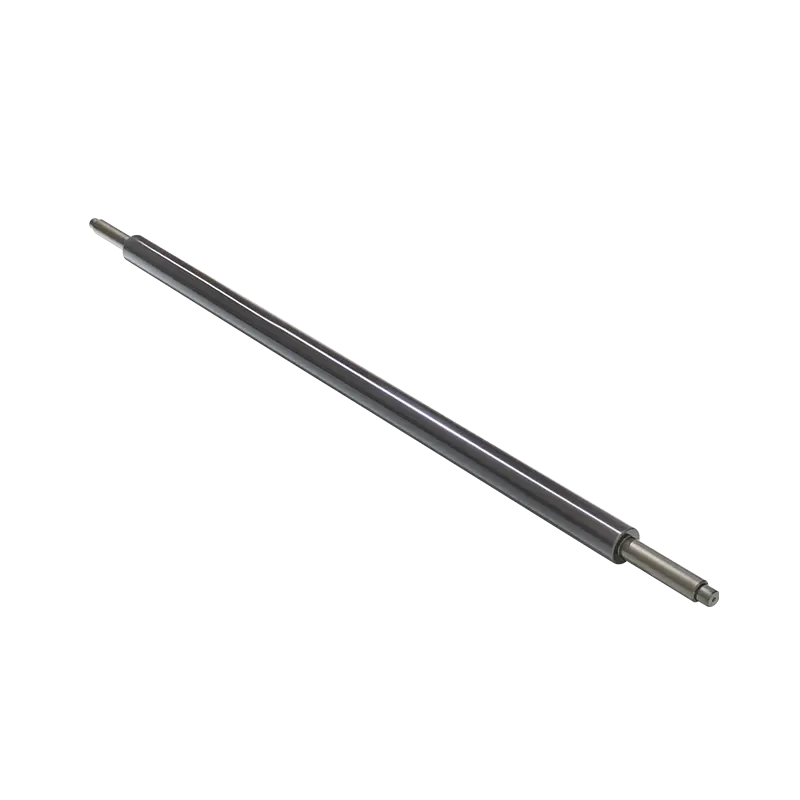
How Conveyor Belt Rollers Affect Conveyor Operation
Rollers support the belt as it moves and help keep it running along the intended path. Diameter, bearing quality, surface material, installation position—all of it affects how smoothly the conveyor operates.
A seized bearing increases resistance and damages the belt. Poorly aligned rollers cause the belt to drift. Inadequate support leads to sagging under heavy loads. And these problems get more expensive once they start affecting other conveyor components—not just the roller itself.
Common Types of Conveyor Belt Rollers
Carrying Rollers
Carrying rollers support the loaded side of the conveyor. They often come in groups of three, with angled rollers forming a trough that holds bulk materials more securely. This arrangement is common in mining, aggregate processing, and other bulk-handling operations. Roller spacing and load capacity need to match the belt width and the weight of the materials being moved.
Return Rollers
After materials are discharged, the belt travels back along the underside. Return rollers support this unloaded section and help prevent excessive sagging. Flat rollers are widely used for standard applications. Where sticky material tends to collect on the belt, rubber-disc return rollers can help limit buildup by leaving gaps between the discs.
Impact Rollers
Loading points are hard on conveyor belts. Material falling from a chute or transfer point produces concentrated impact forces. Impact rollers usually have rubber rings or other cushioning surfaces to absorb some of that force. They protect the belt and supporting structure, especially when handling large or heavy materials.
Self-Aligning Rollers
When a conveyor belt starts drifting sideways, self-aligning rollers can help guide it back toward the center. Depending on the design, they use pivoting frames or guiding mechanisms that respond to belt movement. Useful on long conveyors, but they won't fix every tracking problem. Incorrect pulley alignment, uneven loading, damaged belt edges, or installation errors may still need attention.
Comparing Roller Types and Their Applications
| Roller type | Main function | Common application | Key consideration |
|---|---|---|---|
| Carrying roller | Supports the loaded belt | Mining, manufacturing, bulk handling | Load capacity and belt width |
| Return roller | Supports the empty belt | Warehousing and production lines | Tracking and material buildup |
| Impact roller | Cushions falling material | Mining and aggregate handling | Impact force and material size |
| Self-aligning roller | Helps correct belt deviation | Long-distance conveyors | Mechanism and installation |
| Rubber-disc roller | Helps reduce material buildup | Sticky or damp material handling | Rubber quality and cleaning conditions |
A single conveyor may use several of these designs. Impact rollers often sit beneath loading points, while carrying and return rollers support the rest of the belt route.
What to Consider When Choosing Rollers
Material weight and size: Heavy loads call for suitable shaft dimensions, shell thickness, and bearing capacity. Large pieces of material also create greater impact at transfer points.
Belt speed and working hours: A conveyor running continuously places more demand on bearings and seals. At higher speeds, roller balance and dimensional accuracy become particularly important.
Working environment: Dust, water, chemicals, and temperature changes can shorten bearing life. Sealed bearings or corrosion-resistant materials may be necessary, depending on the site.
Rolling resistance: Poor bearings, incorrect alignment, and rough surfaces increase the force needed to move the belt. Roller diameter and bearing condition also affect resistance and energy use.
Roller Quality and Maintenance
A roller can look fine from the outside while its bearing is already on the way out. Dust or moisture entering through damaged seals causes the bearing to run roughly, heat up, or seize. Poor welding and inaccurate shaft dimensions create vibration during operation.
When inspecting conveyor rollers, pay attention to:
- Bearing rotation and running noise.
- Vibration and dynamic balance.
- Shaft-to-shell welding quality.
- Seal condition and resistance to contamination.
- Roller diameter, length, and concentricity.
During routine maintenance, unusual noise, hot bearings, restricted rotation, or visible shell damage shouldn't be ignored. Replacing a failing roller early is usually less disruptive than dealing with a damaged belt or support frame later.
Getting the Roller Configuration Right
Different sections of a conveyor have different demands. Carrying rollers handle material weight, impact rollers deal with loading forces, and return rollers support the belt after discharge. Self-aligning designs help where tracking is a recurring concern.
When sourcing Conveyor Belt Rollers, buyers should provide the belt dimensions, material weight, operating speed, working hours, and site conditions. Those details give manufacturers a much clearer basis for recommending roller types, materials, and bearing specifications.

We specialize in manufacturing aluminum guide rolls, air shafts, steel rolls, rubber rolls, curved rolls, slip shafts, magnetic powder brakes, and other mechanical supporting products.
©2025 Ruian Baixiao Machinery Co., Ltd.

Aluminum Guide Rollers Manufacturer