
 Español
 Deutsch


Can a Hard Anodized Aluminum Roller Resist Corrosion in Harsh Industrial Environments?
Industrial rollers live rough. Moisture, chemicals, abrasive grit, temperature swings—the surface takes a beating. Corrosion sneaks in, friction climbs, processed materials get contaminated, dimensions drift, and before you know it the roller's shot. For manufacturers who want something light but still tough, hard anodized aluminum is one route worth checking out.
A Hard Anodized Aluminum Roller combines an aluminum core with a thick, wear-resistant aluminum oxide layer grown electrochemically. That treatment can improve corrosion resistance and durability, no question. But how well it holds up depends on the environment, coating quality, maintenance. Knowing those variables helps engineers and purchasing teams decide if hard anodized aluminum actually fits their application—or if it's just the trendy choice.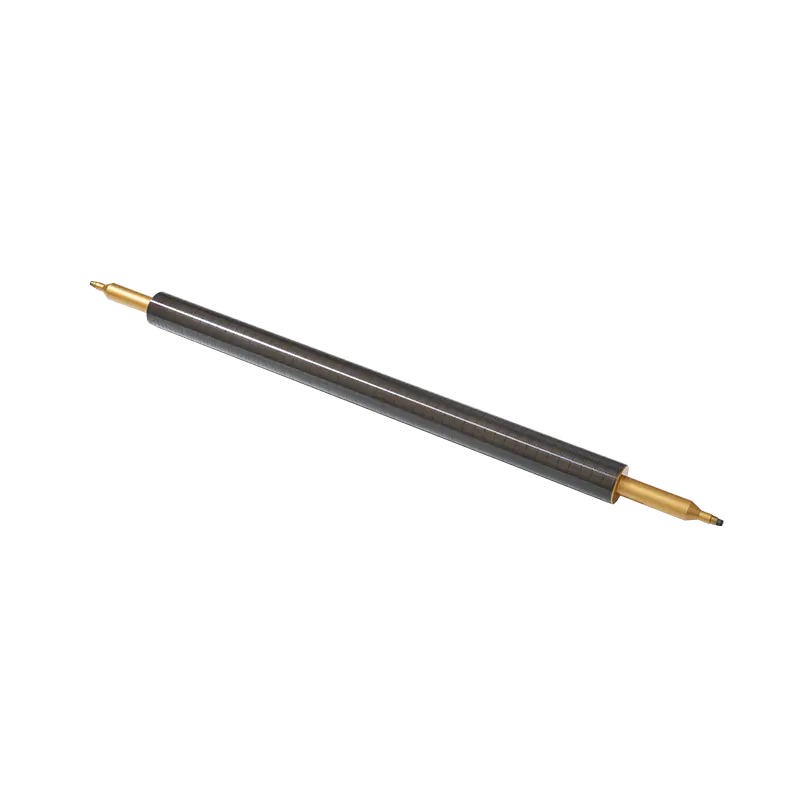
How Hard Anodizing Improves Aluminum Corrosion Resistance
Aluminum naturally forms a thin oxide film when exposed to air. Gives some protection, but it won't survive repeated abrasion or aggressive industrial exposure. Hard anodizing—Type III anodizing in the relevant specs—uses an electrolytic process to build a thicker aluminum oxide layer. Surface ends up harder and more wear-resistant than untreated aluminum. And because the oxide forms from the substrate itself, it's structurally different from paint or an organic coating.
The anodized layer separates the underlying metal from moisture and many corrosive substances. But it's not universally resistant to every chemical. Performance depends on alloy, process, coating thickness, sealing method, exposure conditions. So it's a corrosion-control measure, not a guarantee. There's a difference.
Which Harsh Industrial Environments Can It Withstand?
A hard anodized roller can do well in many settings, but suitability needs evaluating against actual contaminants and operating conditions.
| Industrial environment | Potential performance | Important considerations |
|---|---|---|
| Humid production areas | Often suitable with a properly specified coating | Condensation, trapped moisture, and damaged surfaces |
| Packaging and converting lines | Useful where wear resistance and low weight matter | Cleaning chemicals and contact-material requirements |
| Dusty manufacturing facilities | Can resist surface wear from some operating conditions | Abrasive particles may damage the coating over time |
| Mild chemical exposure | May be suitable for selected chemicals | Verify chemical concentration, temperature, and exposure duration |
| Marine or salt-rich environments | Requires careful evaluation | Chloride exposure, coating defects, and galvanic corrosion |
| Strongly acidic or alkaline environments | May be unsuitable without specific validation | Aluminum oxide can be attacked by certain acids and alkalis |
Humid environments? The anodized layer helps, as long as moisture doesn't sit trapped in damaged areas or poorly designed assemblies. Aggressive cleaning agents? Chemical compatibility becomes the deciding factor.
Salt spray and chlorides deserve a special mention. Chlorides promote localized corrosion—especially where coating defects exist or aluminum's exposed. Hard anodizing alone shouldn't be assumed adequate for continuous seawater exposure or other severe chloride conditions. Strong acids and alkalis can attack aluminum oxide too. Verify compatibility with technical data or test under representative conditions. Don't guess.
Understand the Factors That Affect Corrosion Resistance
A hard anodized coating doesn't automatically determine how long a roller lasts. Manufacturing and design factors matter just as much.
Coating Thickness and Uniformity
Hard anodizing produces a thicker oxide layer than conventional anodizing. Appropriate thickness depends on wear resistance, corrosion exposure, dimensional tolerances, application. Uniform coverage matters—especially around edges, grooves, complex geometries. Thin spots or coating defects become weak points. Excessively thick coatings may affect dimensional fit or introduce other performance considerations. Specs should reflect what the roller actually needs, not just "thicker is better."
Aluminum Alloy Selection
Different alloys respond differently to anodizing. Composition influences coating formation, appearance, finished surface properties. Engineers should confirm the alloy suits hard anodizing and the intended environment. The coating can't compensate for every limitation of the underlying material—especially when the roller also has to handle mechanical loads or repeated contact.
Sealing and Surface Quality
Depending on application, sealing may reduce anodized coating porosity and improve corrosion resistance. But sealing choices influence other properties, including wear performance. The right approach balances corrosion protection, abrasion resistance, operating conditions.
Surface damage matters too. Scratches, impact marks, machining performed after anodizing—they expose the substrate. Post-treatment machining or finishing requirements should be discussed with the manufacturer before production. Better to sort that out early than discover it after the parts ship.
Compare Hard Anodized Aluminum With Alternative Roller Materials
Hard anodized aluminum isn't always the answer. Compare material options to determine whether weight, wear resistance, corrosion performance meet the application's needs.
| Roller material or finish | Main advantages | Potential limitations |
|---|---|---|
| Hard anodized aluminum | Lightweight, wear-resistant surface, and improved corrosion protection | Vulnerable to certain chemicals and coating damage |
| Uncoated aluminum | Lightweight and relatively easy to machine | Generally offers less wear protection |
| Stainless steel | Good corrosion resistance in many environments and strong mechanical properties | Heavier and potentially more expensive |
| Chrome-plated steel | Hard surface and useful wear characteristics | Plating defects or damage can compromise corrosion protection |
| Polymer rollers | Potential chemical resistance and low weight, depending on the polymer | Load capacity, temperature limits, and dimensional stability vary |
Material selection should account for the roller surface and the complete assembly. Shafts, bearings, fasteners, mounting hardware—they introduce galvanic corrosion risks when dissimilar metals contact each other in the presence of an electrolyte. That's a systems problem, not a surface-finish problem.
How to Maintain a Hard Anodized Aluminum Roller
Maintenance preserves the coating and catches problems before they hit production.
- Use compatible cleaning agents. Avoid strongly acidic or alkaline formulations unless compatibility has been confirmed.
- Inspect high-wear areas. Check contact surfaces, edges, grooves for scratches, flaking, discoloration, exposed aluminum.
- Prevent moisture accumulation. Improve drainage where practical. Remove persistent deposits that hold moisture against the roller.
- Check surrounding components. Look for corrosion around fasteners, bearings, metal interfaces.
- Follow manufacturer guidance. Use recommended inspection intervals and cleaning procedures based on operating conditions.
Corrosion appears? Identify the cause before replacing or refinishing. Chemical incompatibility, coating damage, contamination, galvanic interaction—different causes, different fixes. Applying another surface treatment without addressing the root cause rarely solves anything. It just postpones the problem.
Specify the Right Roller for Your Operating Conditions
Before ordering, give the manufacturer details on humidity, chemical exposure, temperature range, contact materials, mechanical loads, expected operating life. Specify coating requirements, dimensional tolerances, surface finish, relevant industry standards.
Aggressive environments? Request documented chemical compatibility information or test under representative conditions. Salt spray testing helps compare coating performance under a defined method, but it doesn't independently predict service life in every real-world installation. Nothing does, really.
A Hard Anodized Aluminum Roller can offer a solid combination of lightweight construction, surface hardness, and corrosion protection in many industrial applications. Whether it's right for yours depends on coating quality, material selection, chemical exposure, maintenance. Evaluate those factors before purchase and you reduce the risk of premature roller failure. Skip that step and you'll likely revisit the decision sooner than expected.

We specialize in manufacturing aluminum guide rolls, air shafts, steel rolls, rubber rolls, curved rolls, slip shafts, magnetic powder brakes, and other mechanical supporting products.
©2025 Ruian Baixiao Machinery Co., Ltd.

Aluminum Guide Rollers Manufacturer