
 Español
 Deutsch

What Makes Carbon Fiber Rubber Roller Suitable for High Speed Equipment
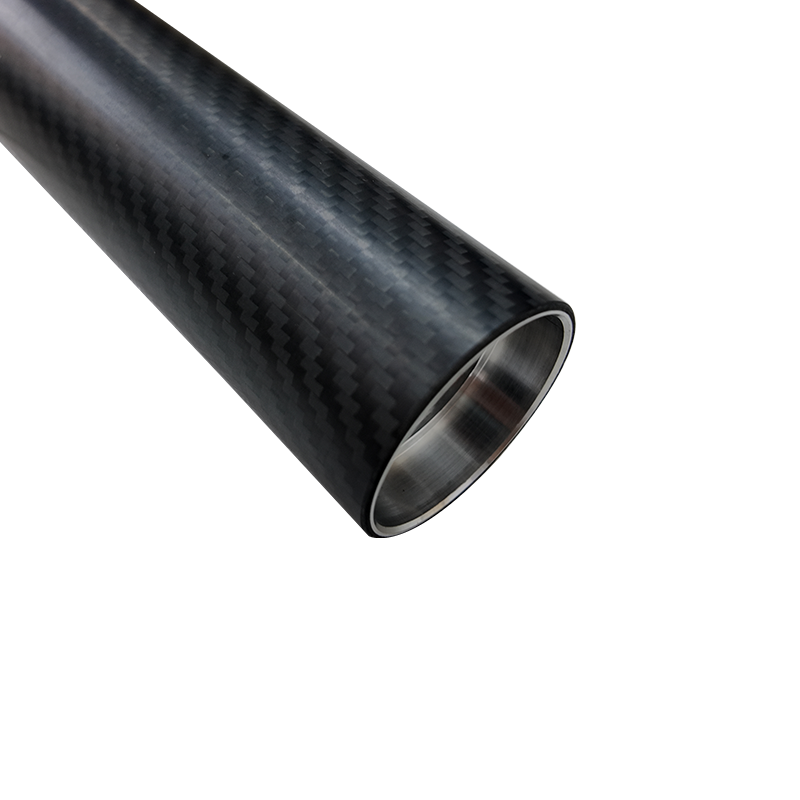
Look at the cross-section of one of these rollers, and two distinct layers appear. A carbon fiber tube forms the inner core, wrapped in layers of composite material that give the roller its strength and light weight. A rubber covering bonds to the outside of that core, providing the contact surface that grips, drives, or guides the web material passing through the equipment. The two materials do not simply sit next to each other. They work as a single component, each contributing properties that the other does not possess.
The carbon fiber core offers stiffness and low weight. The rubber covering provides traction and gentle contact with delicate materials. Together, they produce a roller that behaves differently from conventional steel or aluminium designs. A printing press, a slitting machine, or a coating line all benefit from the combination.
The manufacturing process for a Carbon Fiber Rubber Roller involves wrapping prepreg carbon fibre around a mandrel, curing it under heat and pressure, machining the cured tube to size, then applying and vulcanising the rubber layer. The bond between the two materials must withstand the forces of rotation and the heat generated during operation. A weak bond leads to separation and failure.
Why Does High Speed Equipment Place Demands on Rollers
Rollers running at elevated speeds face forces that slower rollers do not encounter. Centrifugal force pulls outward on the rubber covering, trying to stretch it away from the core. The force increases with the square of the speed. A roller running twice as fast experiences four times the centrifugal force. The rubber must stay in place despite that outward pull.
The bearings supporting the roller carry the weight of the rotating assembly. A heavier roller places more load on the bearings, generating more friction and heat. The bearings must handle not just the weight but also any imbalance in the rotating mass. The total load on bearings increases with speed, and bearing life decreases as load increases.
Alignment becomes critical at high speed. A roller that sits even slightly out of parallel with the rest of the rollers in the line creates uneven loading and excessive wear. The forces multiply with speed. A small misalignment that causes little trouble at low speed can produce significant vibration and wear at high speed.
How Does Carbon Fiber Construction Reduce Rotational Mass
Steel and aluminium work well at moderate speeds. Both become limiting factors as equipment speeds increase. Steel weighs roughly twice as much as aluminium for the same dimensions. Carbon fibre weighs about one-fifth as much as steel and about half as much as aluminium.
The mass reduction changes how the roller behaves. A lighter roller starts up faster because less inertia needs overcoming. It stops faster when the line stops. The reduced mass also lowers the load on bearings, extending their service life and reducing the energy needed to maintain rotation. The energy savings, small for a single roller, become significant across dozens of rollers on a long production line.
Handling a Carbon Fiber Rubber Roller during installation and maintenance also becomes easier. A worker can lift a carbon fibre roller that would require mechanical assistance if made from steel. The lighter weight reduces strain on technicians and speeds up maintenance procedures.
What Role Does Material Stiffness Play at High Speed
Stiffness keeps a roller straight under load. A roller that bends in the middle creates uneven contact with the material passing over it. The web tension varies across the width, causing wrinkles, wandering, or inconsistent coating thickness. Stiffness prevents that deflection.
Carbon fibre offers high stiffness per unit weight. The material resists bending even in long, thin rollers that would deflect significantly in steel or aluminium. A roller with a carbon fibre core maintains its straightness across its full length, even with high web tension or load applied at the centre.
The effect of stiffness on product quality shows up in printing and coating applications. A roller that stays straight maintains consistent pressure across the entire contact area. The coating thickness remains uniform from edge to edge. The printed image stays sharp and registration does not wander. A roller that deflects, even slightly, creates variations that appear as defects in the finished product.
How Does the Rubber Covering Perform Under High Speed
The rubber layer on a Carbon Fiber Rubber Roller faces its own set of challenges at high speed. The material gets pulled outward by centrifugal force. That outward pull stretches the rubber, reducing the pressure against the web and potentially causing the rubber to separate from the core. The rubber compound must resist that stretch while remaining flexible enough to do its job.
Heat builds up in the rubber during rotation. Every cycle of compression and relaxation generates heat through hysteresis. The heat increases with speed. A roller running at high speed may reach temperatures that soften the rubber, alter its hardness, or accelerate wear. The rubber compound selected for the covering must withstand the temperature rise expected in the application.
| Characteristic | Steel Core | Aluminium Core | Carbon Fibre Core |
|---|---|---|---|
| Weight | Heavy | Moderate | Light |
| Stiffness | High | Moderate | High |
| Rotational inertia | High | Moderate | Low |
| Thermal expansion | Moderate | High | Low |
| Vibration damping | Low | Low | Moderate |
| Bearing load | High | Moderate | Low |
What Makes an Anti Static Rubber Roller Different
Static electricity builds up whenever two materials move against each other and then separate. In a web handling process, the web material sliding over a roller generates a charge. That charge stays on the web and on the roller. Enough charge accumulation creates problems. Dust gets attracted to the charged surfaces. The web sticks to rollers instead of releasing cleanly. A sudden discharge can damage sensitive electronic components or create a spark in environments with flammable materials.
An Anti Static Rubber Roller addresses these issues directly. The rubber compound includes conductive fillers, usually carbon black or specialised additives, that allow electrical charge to flow through the material rather than accumulating on the surface. The charge dissipates to ground through the roller and the machine frame.
Carbon fibre itself has conductive properties. When the core of an Anti Static Rubber Roller uses carbon fibre construction, the core provides a direct path for static dissipation. The rubber covering, with its conductive additives, connects the web surface to the core. The static charge moves from the web into the rubber, through the carbon fibre core, and out to ground. The process happens continuously as the web passes over the roller.
Several applications require an Anti Static Rubber Roller. Film and sheet extrusion lines use them to prevent static attraction of dust to the finished product. Paper converting operations rely on static dissipation to keep sheets from sticking together. Printing presses use them to eliminate static that affects ink transfer. Any process that moves a non-conductive web at high speed risks static build-up.
How Do Operating Conditions Affect Roller Longevity
Temperature changes affect both carbon fibre and rubber. The rubber covering softens at high temperatures and hardens at low temperatures. Soft rubber wears faster and may deform under load. Hard rubber may not grip the web properly. The carbon fibre core handles temperature changes better than steel or aluminium because its coefficient of thermal expansion runs lower. The core does not grow or shrink as much with temperature changes, which helps maintain the bond between the core and the rubber.
Chemical exposure presents another risk. Solvents, inks, and cleaning agents can attack the rubber covering, causing swelling, cracking, or softening. The rubber compound must resist the chemicals present in the application. A roller used in a solvent-based coating line requires different rubber chemistry than one used in an aqueous process. The selection of the rubber covering considers the chemical environment along with the mechanical demands.
Maintenance practices affect roller life directly. Regular cleaning removes residue that can harden on the rubber surface and accelerate wear. Checking roll alignment prevents uneven loading that shortens bearing life and causes the roller to run out of true. Replacing bearings before they fail prevents damage to the roller shaft or core. These practices apply to any roller, but they matter more for expensive carbon fibre rollers that require longer service lives to justify their initial cost.
What Happens When Roller Balance Is Not Maintained
An out-of-balance roller creates vibration that travels through the entire machine. The vibration increases bearing loads, accelerates wear, and shortens service life. At high speed, the vibration can become severe enough to cause quality problems in the product or even damage the equipment itself.
The balance condition of a Carbon Fiber Rubber Roller changes over time. Wear on the rubber covering removes material unevenly, shifting the balance. Adhesive residue builds up in patches, also affecting balance. Repairs or replacements to the rubber covering require re-balancing the roller before it returns to service.
Balancing a carbon fibre roller follows similar procedures to balancing any roller. The technician mounts the roller on balancing equipment, measures the imbalance, and adds or removes material to correct the condition. Carbon fibre rollers often require less correction than steel rollers because the core construction produces more uniform material distribution. The rubber covering, applied and ground after core balancing, introduces its own balance considerations.
How Does Roller Design Affect Web Handling at Speed
The diameter of a Carbon Fiber Rubber Roller affects how the web wraps around it. A larger diameter creates a longer wrap angle, reducing the pressure per unit area and allowing higher tension without slip. The bending stiffness of the roller increases with diameter, which helps maintain straightness under load. A smaller diameter reduces inertia and allows tighter spacing between rollers in the machine.
The surface finish of the rubber covering determines how the web interacts with the roller. A smooth finish works for driving a web with uniform contact pressure. A textured finish improves grip for pulling tension or for handling slippery materials. The rubber hardness also affects grip. Softer rubber conforms more to the web surface, improving contact. Harder rubber provides more support and wears more slowly.
The following points show how roller features support different web handling requirements:
- Larger diameter improves stiffness and heat dissipation
- Smaller diameter reduces weight and inertia
- Smooth finish suits delicate or pressure-sensitive materials
- Textured finish helps with high-tension or low-traction webs
- Softer rubber grips better but wears faster
- Harder rubber lasts longer but may not conform as well
Why Carbon Fibre Has Become the Choice for High Speed Applications
Carbon fibre combines properties that address the specific demands of high speed equipment. The low weight reduces bearing loads and energy consumption. The high stiffness maintains straightness under tension. The low thermal expansion keeps dimensions stable across temperature variations. The vibration damping improves equipment stability and product quality.
Steel and aluminium have served well for generations of slower equipment. As line speeds have increased, the limitations of traditional materials have become more apparent. A steel roller that works well at 300 metres per minute may cause problems at 600 metres per minute. The same roller, with a carbon fibre core, continues to perform because the weight has dropped and the stiffness has remained high.
The rubber covering matters just as much as the core. The right compound, properly bonded to the core, provides the grip and release that the process requires. An Anti Static Rubber Roller adds static dissipation to the list of capabilities, preventing problems that would otherwise affect quality and safety.
The value of a Carbon Fiber Rubber Roller shows up in lower maintenance costs, reduced energy consumption, fewer quality defects, and longer service intervals. The initial investment exceeds that of a steel or aluminium roller, but the return comes through performance and longevity. For equipment running at high speed with demanding web handling requirements, the carbon fibre construction makes the difference between reliable operation and ongoing problems.

We specialize in manufacturing aluminum guide rolls, air shafts, steel rolls, rubber rolls, curved rolls, slip shafts, magnetic powder brakes, and other mechanical supporting products.
©2025 Ruian Baixiao Machinery Co., Ltd.

Aluminum Guide Rollers Manufacturer